Category Archives: Uncategorized

Trending North

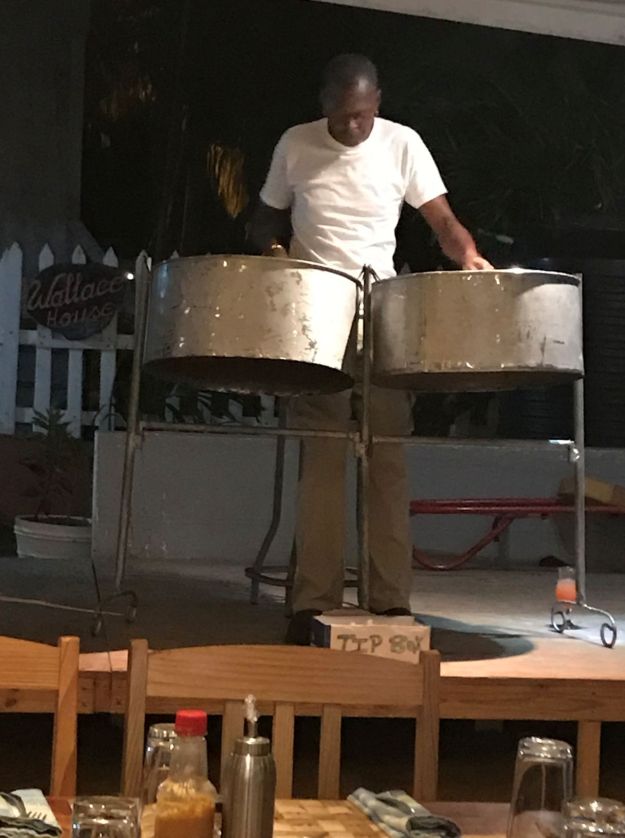
After two months of exploring the countries of Grenada and St. Vincent we headed north toward St. Lucia where we hoped to get our water maker serviced, pick up some engine parts and complete several other boat projects.  On the way we stopped overnight at Admiralty Bay on Bequia Island where we listened to a steel drum player over dinner; not the classic Caribbean steel drum band on a beach, but nonetheless enjoyable music and very awesome example of “Recycle – Reuse”.
SteelDrum.small

The next day was a 10-hour sail to Marigot Bay on St Lucia. Along the way we saw everything from winds over 20 knots in the passages between islands, to 0 knots on the leeward sides.  Our check in in Marigot Bay was “Interesting”, as Captain Dave tells it: Showed up at the customs office 30 minutes after scheduled opening. Customs guy is there so I fill out the forms (4 pages all different colors with actual “carbon paper” in between each sheet). Customs signs his parts and tells me the Immigration guy and the Port guy are not in yet…by 10am they are still not “in yet” so the customs officer tells me that since I’m planning to head up to Rodney Bay any way, I can finish checking in there and hands me the “yellow” copy. We pull anchor and have a nice 2-hour sail north to Rodney Bay which is a large bay with lots of room to anchor, and the end point of the annual Atlantic Rally for Cruisers (ARC). We find the Officials in Rodney Bay and I tell them my story after I make several copies of the yellow form since I needed the blue, yellow and pink ones to continue; we were successfully legal by about 4pm.

We managed to find a water maker technician who came on board and recommended running chemicals through the membranes to clean them; we could get those chemicals in the town of Marin on the French island of Martinique, the next island north of St. Lucia.  So we stayed one more day in Rodney Bay and hiked up to the fort on Pigeon Island, an historic national park with great views of the bay and surrounding area.  Then we checked out of St. Lucia…went way easier than checking in😉

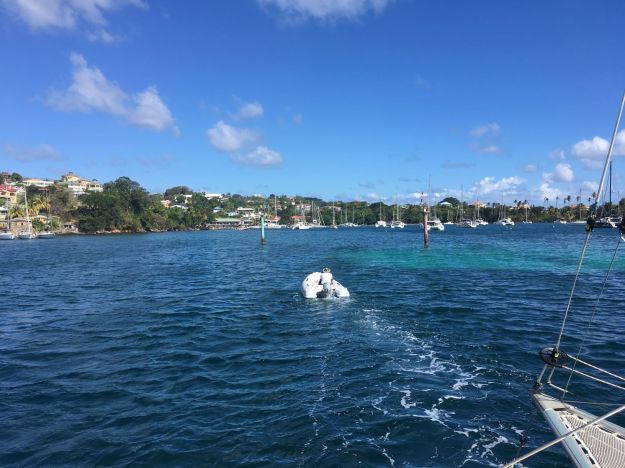
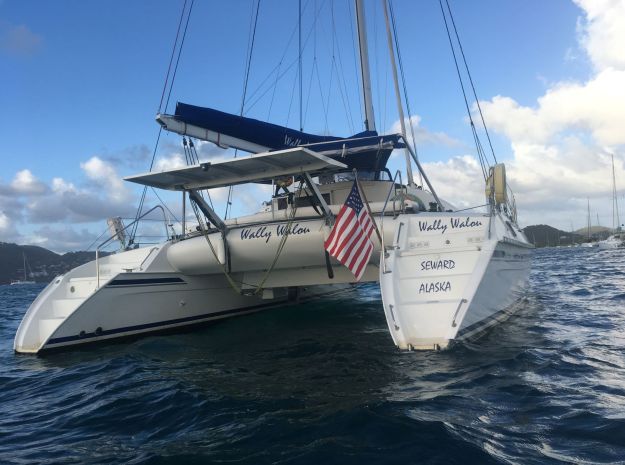
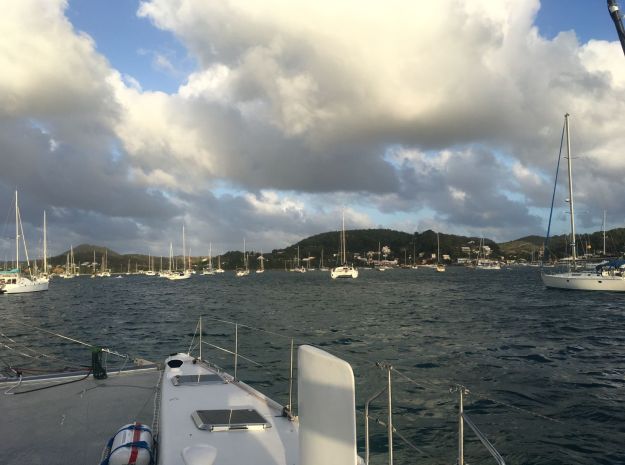
On the morning of March 2, before leaving Rodney Bay, we filled up our diesel tanks; the first time since buying fuel in the Cape Verdes Islands on December 10!  We’ve done lots of sailing in the past 3 months and little motoring, which is what performance catamarans like Outremers can do.  We sailed north to Martinique and anchored at St. Anne on the south end of the island.  The check-in procedure here was the easiest so far; all we had to do is find the Boubou Snack Shop where there was a dedicated computer for entering information needed by customs and immigration.  The French seem to have it figured out.  After completing our check-in we sat at a little café by the harbor and soon John and Marcy Baker showed up in a taxi to visit with us for two weeks!
WallyStAnne.small

StAnneAnchorage.small

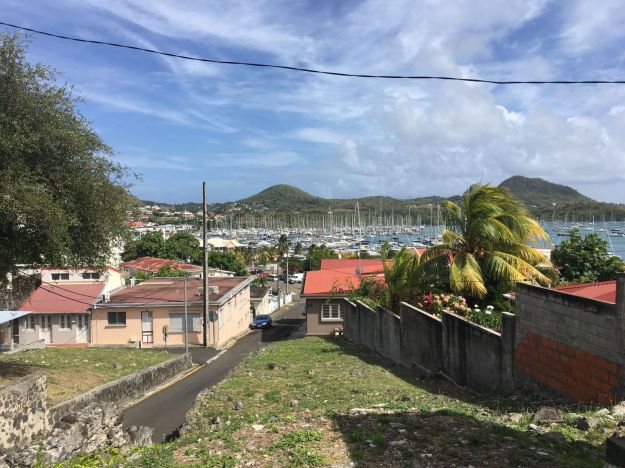
The next day we moved around the corner to Marin and explored this quaint French town.

TilesMarin.small

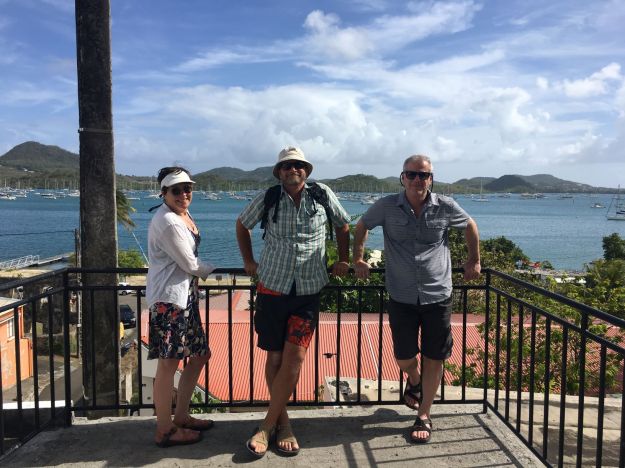
3inMarin.small

BoatsInMarin.small

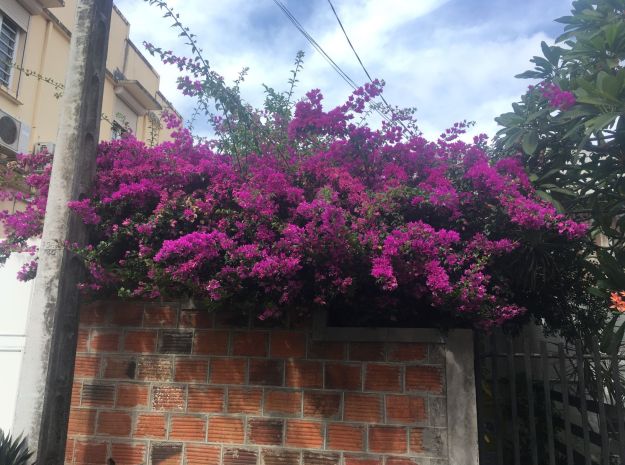
BouganMarin.small

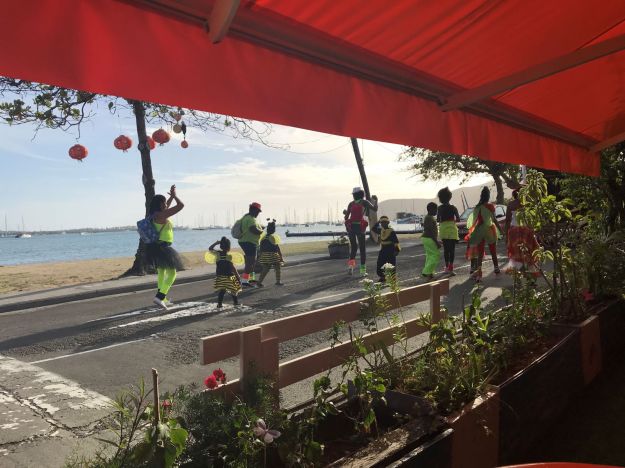
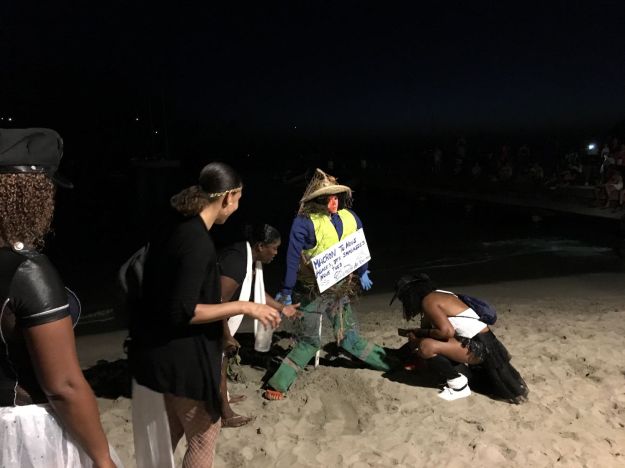
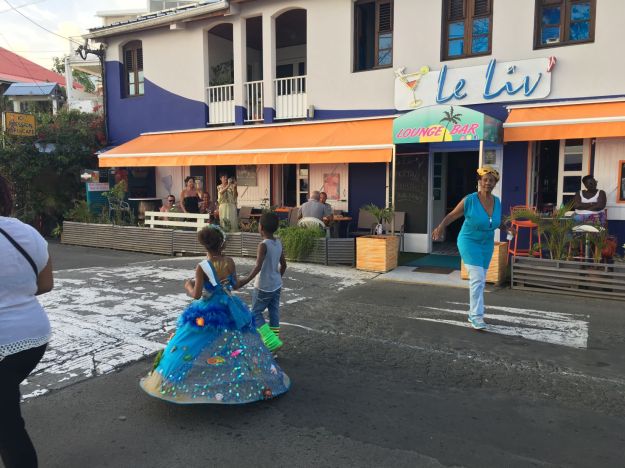
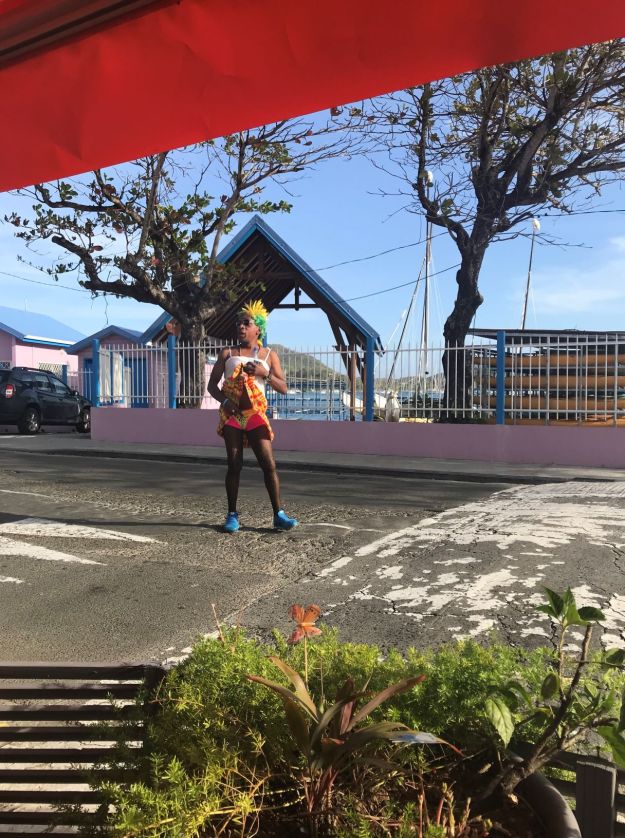
We soon realized it was Carnival time on the island.  The former Outremer skipper Jean Pierre, who had just completed the solo sailing race Route de Rhum from France to Guadeloupe, happened to be in Marin, so we met him for dinner and watched the Carnival parade – lots of colorful costumes and lots of fun.
Carnival3.small

Carnival2.small

Carnival1.small

MacronMarin.small

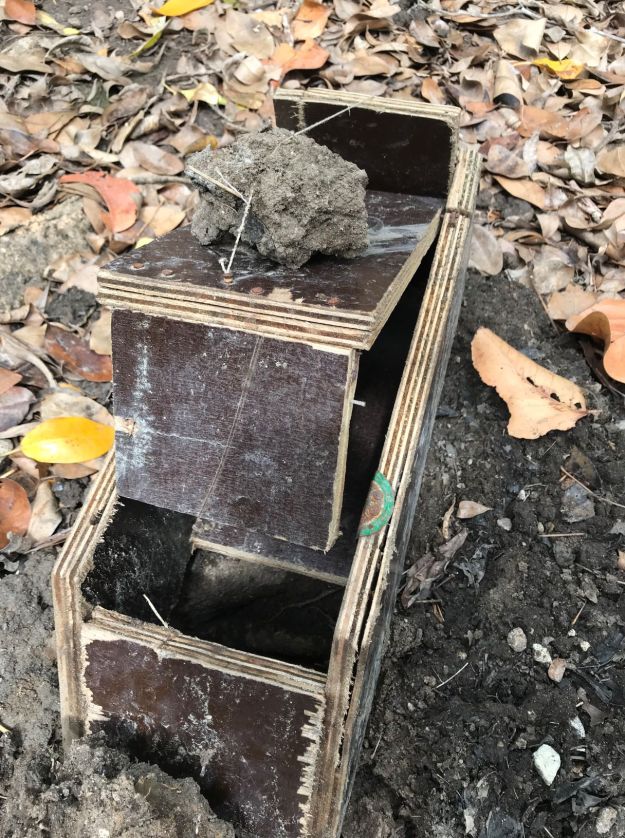
We found the water maker chemicals we needed then we spent the next few days sailing up the west coast of Martinique, exploring various coves and doing lots of snorkeling and hiking.  We anchored off Anse Chaudiere, then Grand Anse D’ Arlet where we snorkeled in a marine park and did a mangrove boardwalk hike.  On that hike we saw numerous large land crabs and innovative traps for the crabs.
CrabTrap.small

We then moved a short ways north and anchored in a small cove, Anse Dufour.  After a late afternoon snorkel a quite agitated man in a small boat came near us and was screaming and gesturing at us in French.  He finally went to shore then rowed out to us again with a calmer gentleman who was able to communicate that they were local fisherman and were going to lay out a fishing net at 6 am the next morning right where we were parked, so could we move to the next bay up? So we did, and anchored in Anse Noire just at sunset.


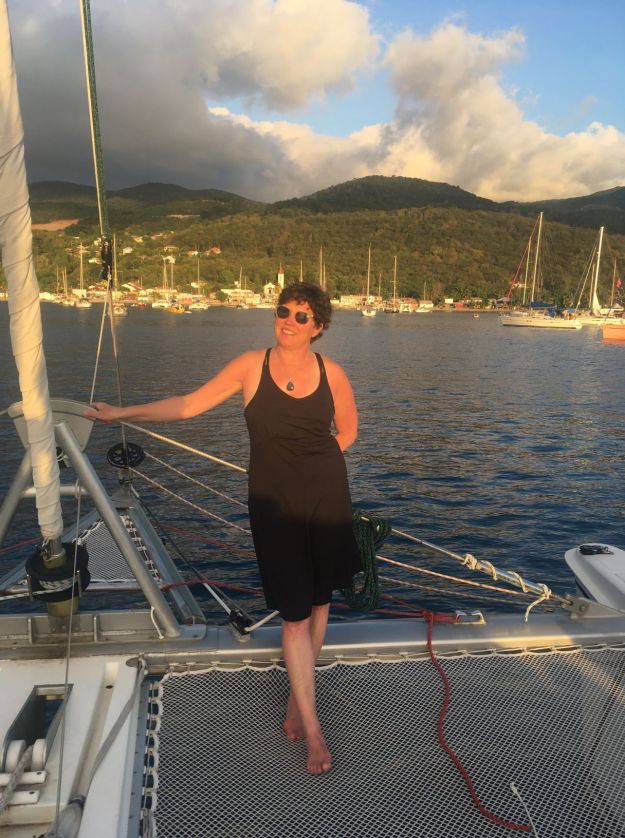
DaveWMartinique.small

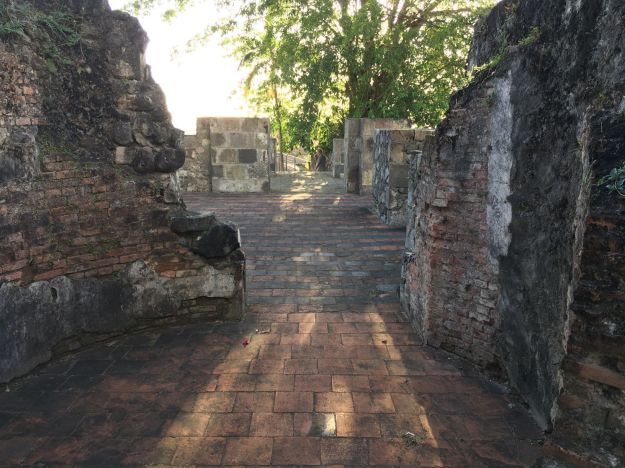
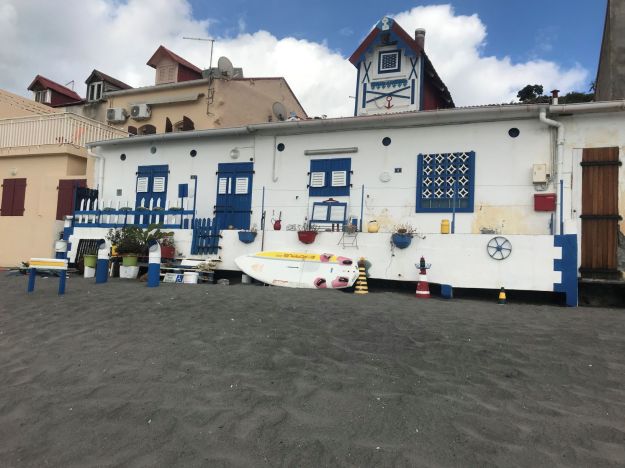
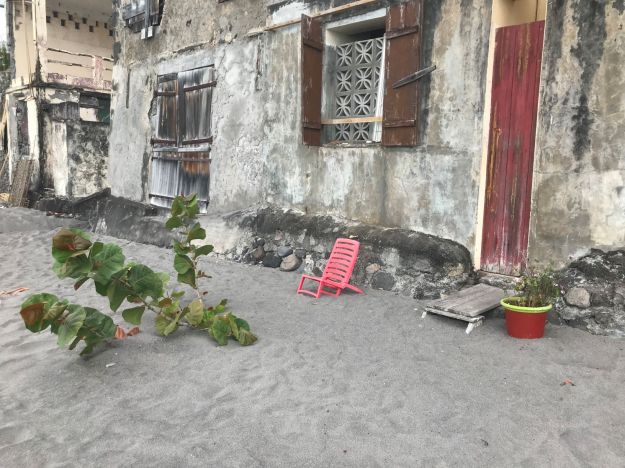
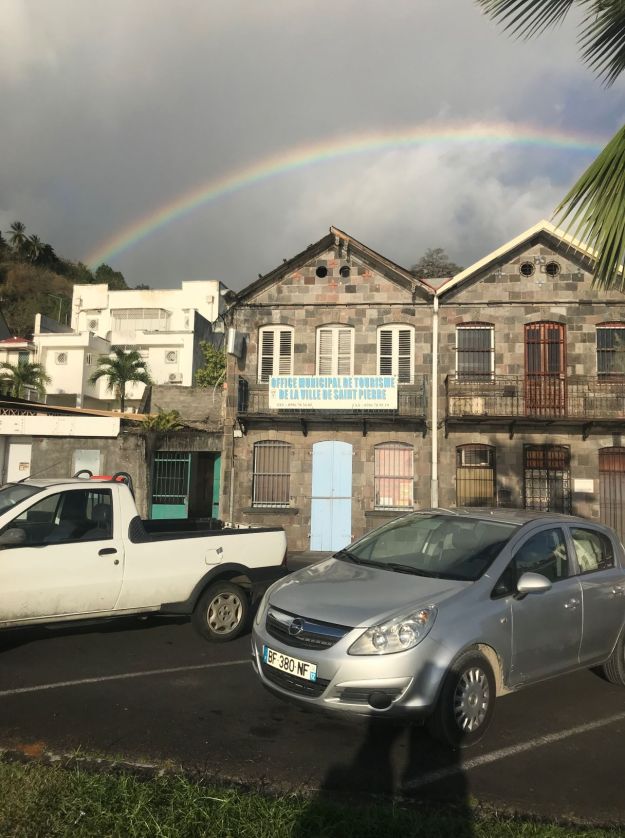
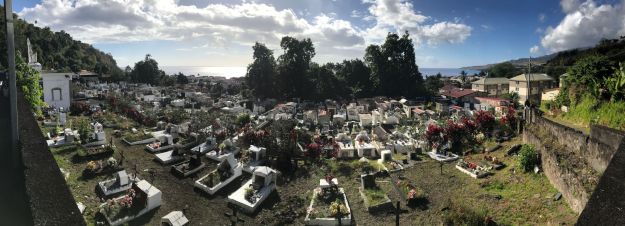
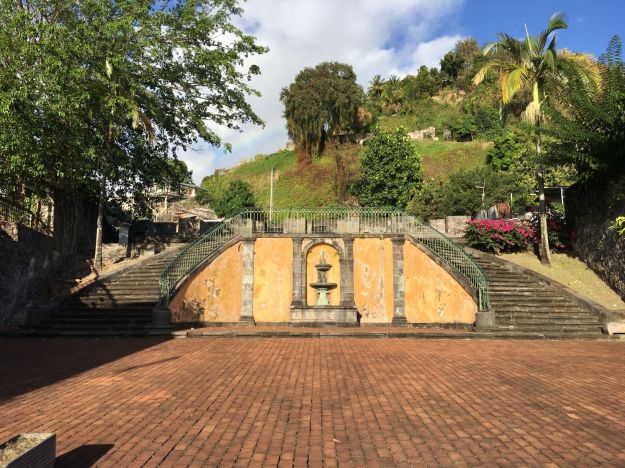
On March 10 we sailed north to St. Pierre, a town that was wiped out by nearby Mt. Pelee’s volcanic eruption in 1902.  It’s an interesting historic town.  Here we checked out of Martinique at a quaint café.
TheatreStPierre.small

Theatre2StPierre.small

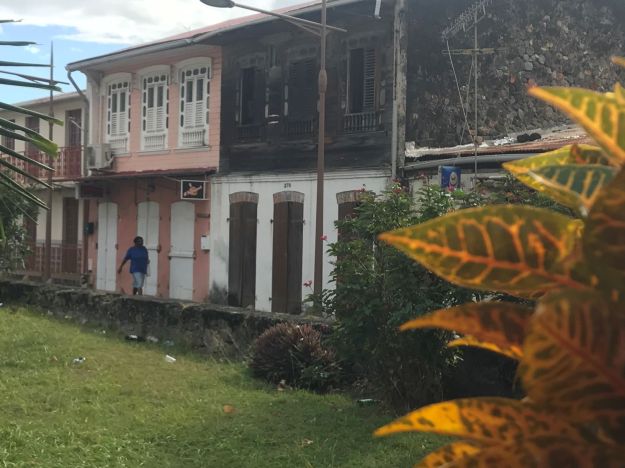
BuildingStPierre1.small

BuildingStPierre2.small

BuildingStPierre3.small

MermaidStPierre.small

RainbowStPierre.small

StairwayStPierre.small

CemeteryStPierre.small

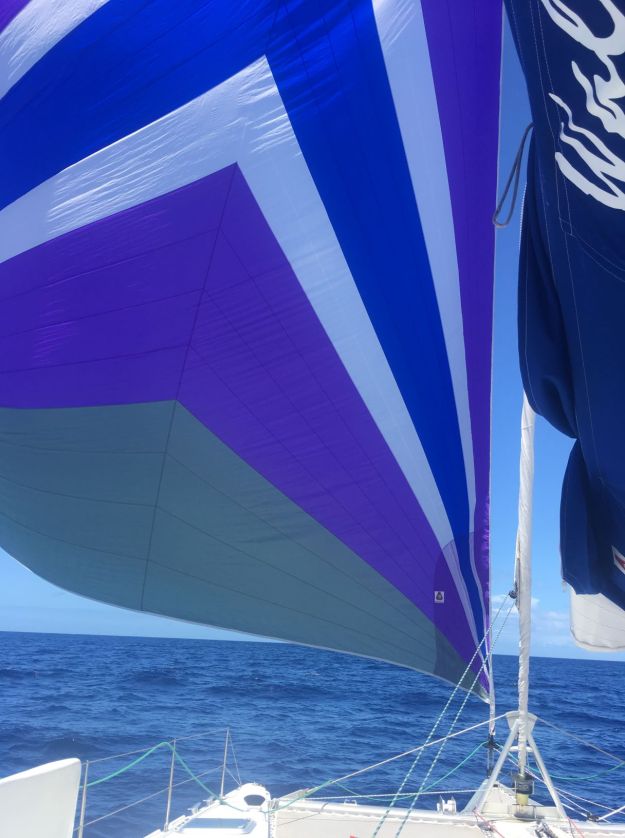
We got up early the next morning and left St. Pierre at 7 am for an all-day sail north to the French island of Guadeloupe, about 70 nm.  We passed by Dominica, an island that has 7 volcanoes and lots of hiking trails; definitely a place we will visit the next time through.
ChuteTowardGuad.small

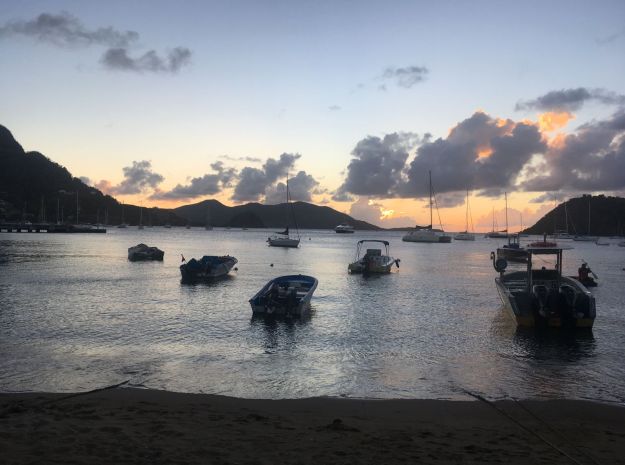
At Guadeloupe we stopped at Ilet Cabrit in the Isles de Saintes, an hour before sunset.  This area has mooring balls and we saw there was one unoccupied mooring ball left, so we moved up to it and noticed there was a fishing bouy next to the mooring ball and 2 local fishing boats working a net.  After hovering and debating what to do the mooring ball manager motored over and said we had to wait for the fishermen to finish pulling in their nets, about an hour, and we could anchor nearby and wait.  So we did, and after probably 2 hours and having to rush over and tie the dinghy to the ball to defend our claim and well into darkness, the fishermen finally left and we successfully moored.

We checked in to Guadeloupe the next morning at the town of Bourg de Saintes, also a super easy process of entering information into a computer.  Bourg de Saintes is very a picturesque town, reminding us of places we had enjoyed back in France.
BourgdeSaintes.small

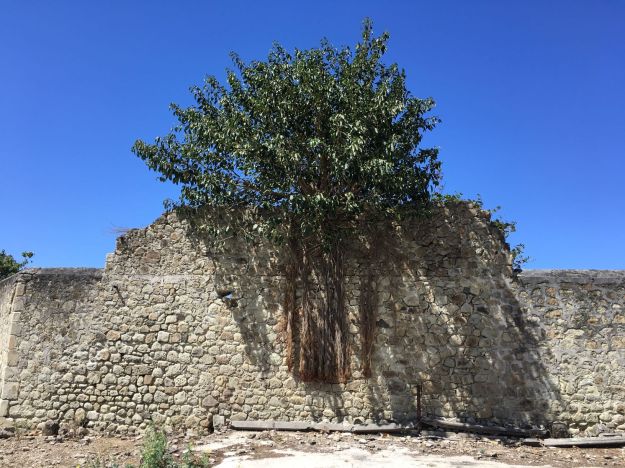
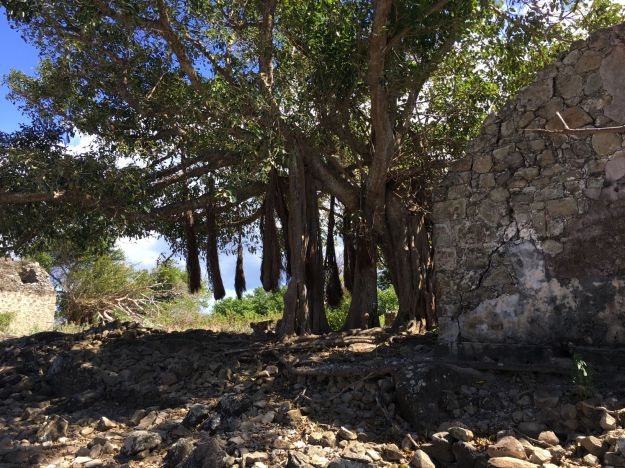
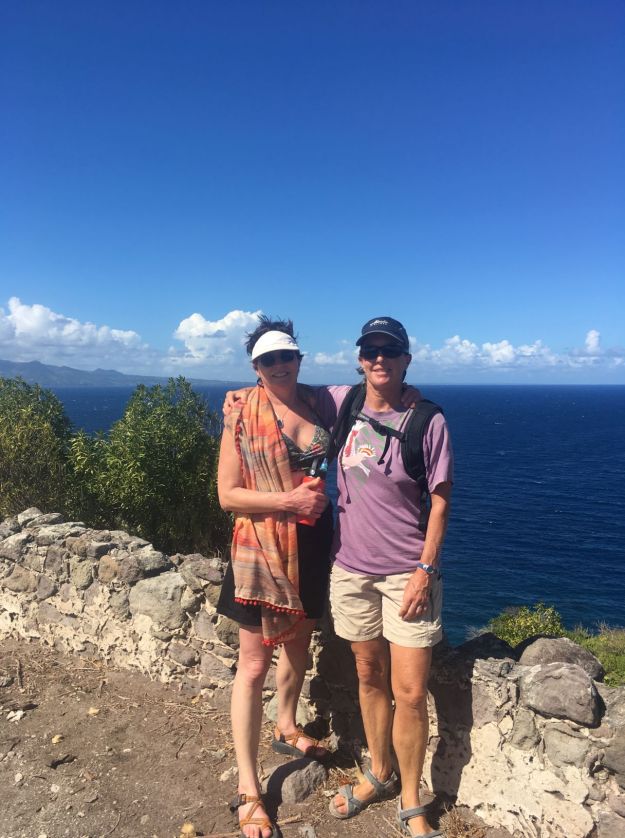
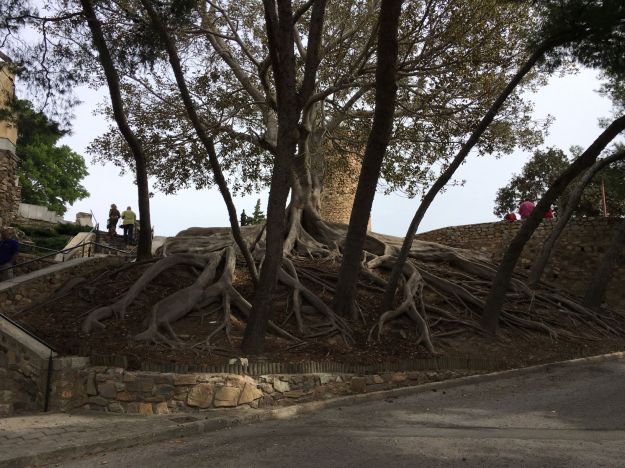
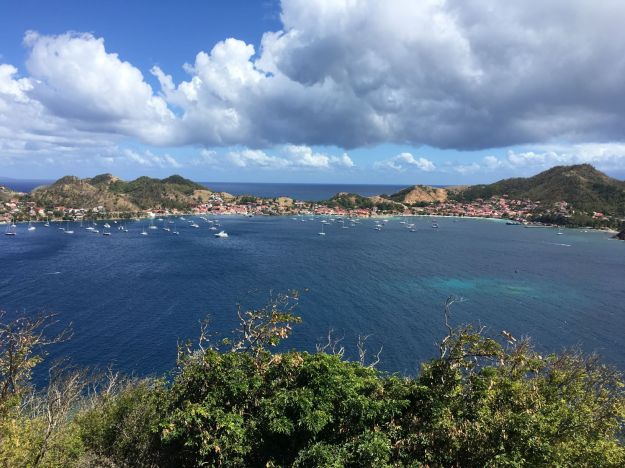
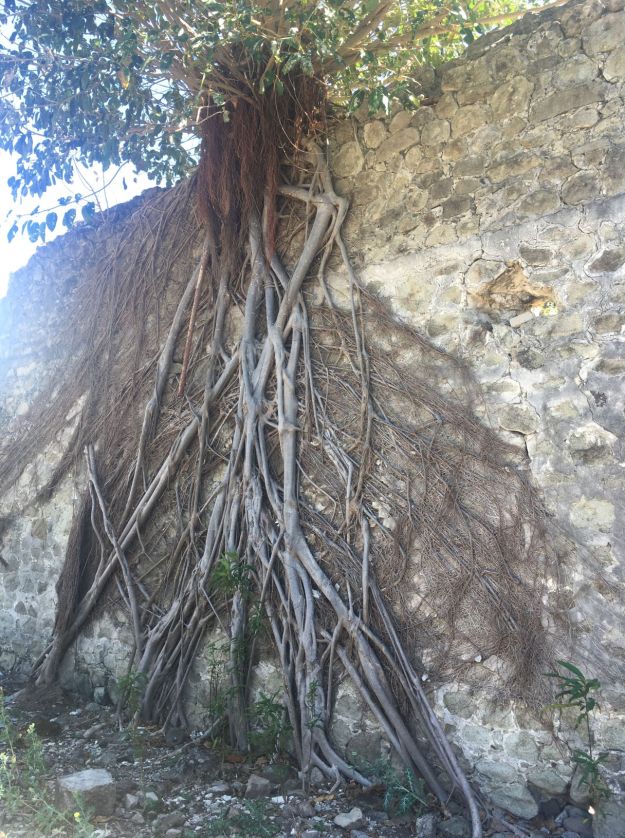
Back on Ilet Cabrit we hiked up to Fort Josephine (as in Napolean’s wife) which had great views of Bourg de Saintes and the surrounding area, and interesting tree roots.
ViewCabrit.small


IletCabritTrees3.small

IletCabritTrees2.small

IletCabritTrees1.small


FortJosephine.small

As we walked around the ruined buildings we noticed a naked woman who seemed to be drying out wet clothes.  Marcy chatted with her and learned she wanted to sing in a building that echoed; but what she thought was sand on the floor of the dark building was actually deep water like maybe a cistern, and she fell in!  We all laughed about it, they were fellow Americans from Cape Cod.  That night we had an amazing Chef’s Special dinner at a restaurant in Bourg de Saintes.

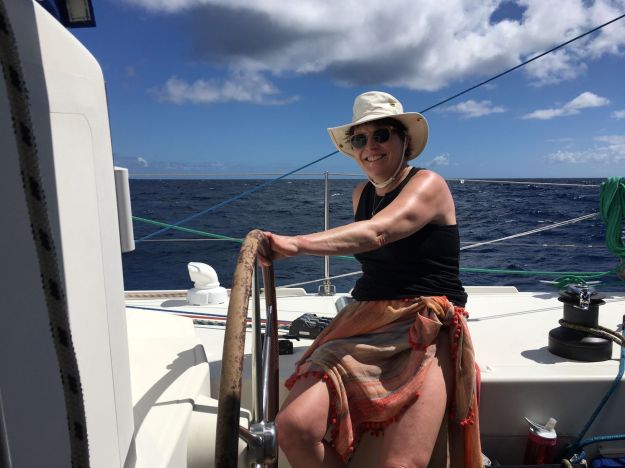
Our next move was up the west coast of Guadeloupe to Pigeon Island.
NearPigeonIsle.small

JohnNearPigeonIsland.small

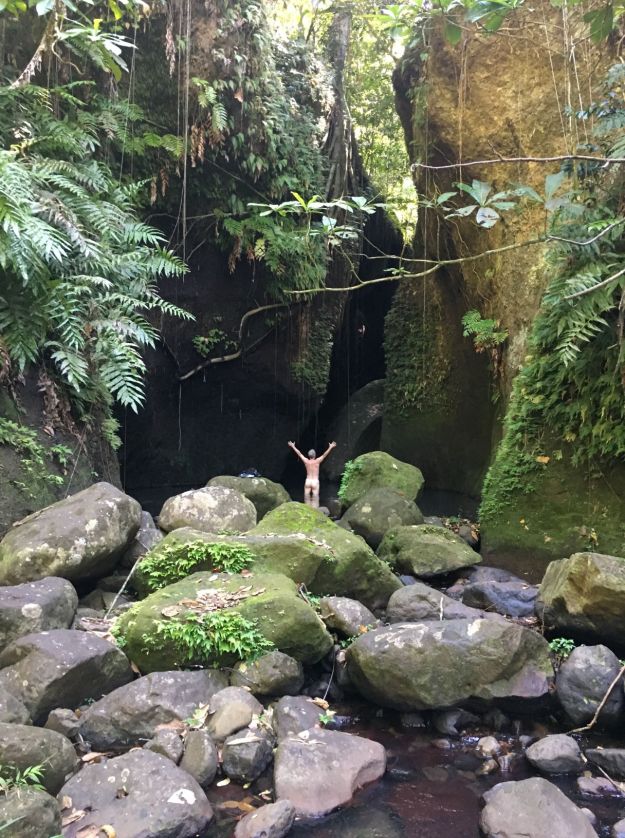
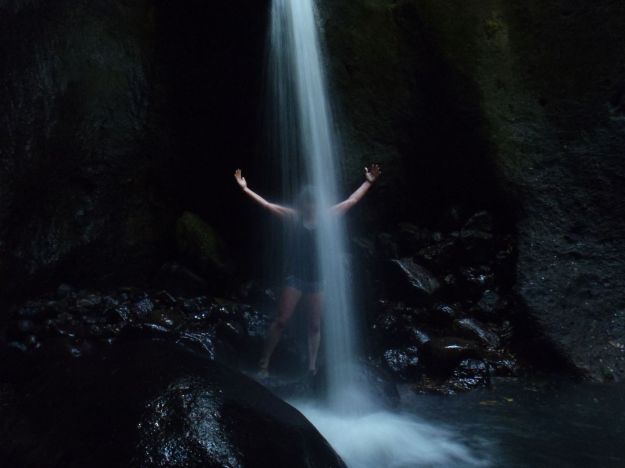
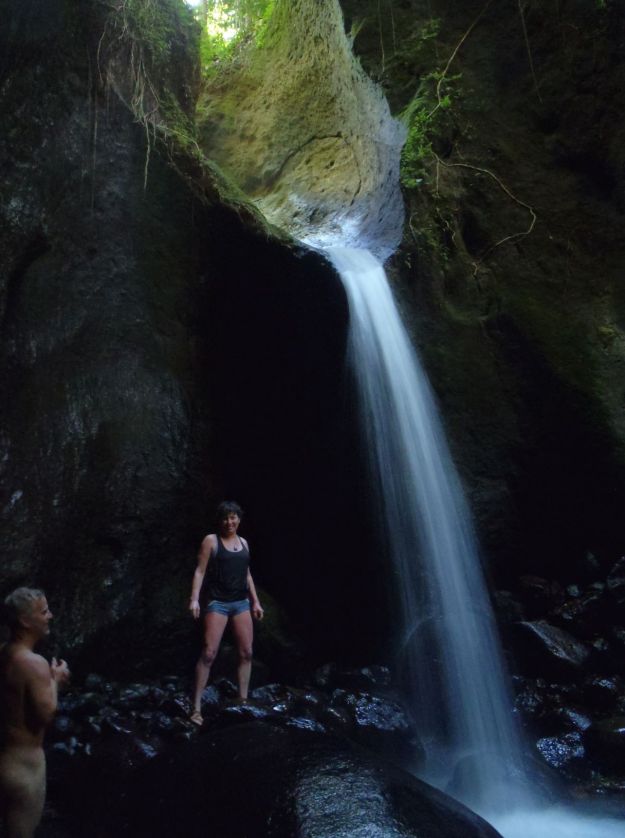
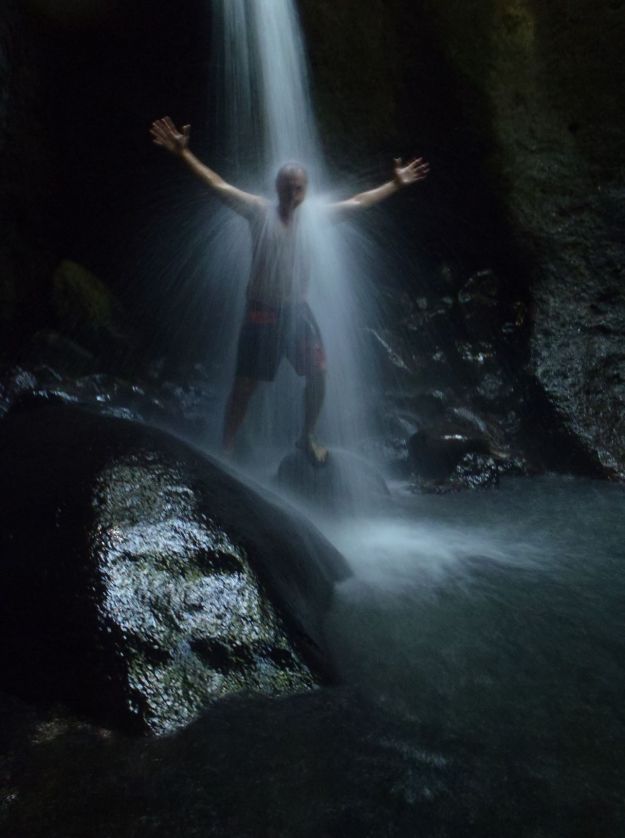
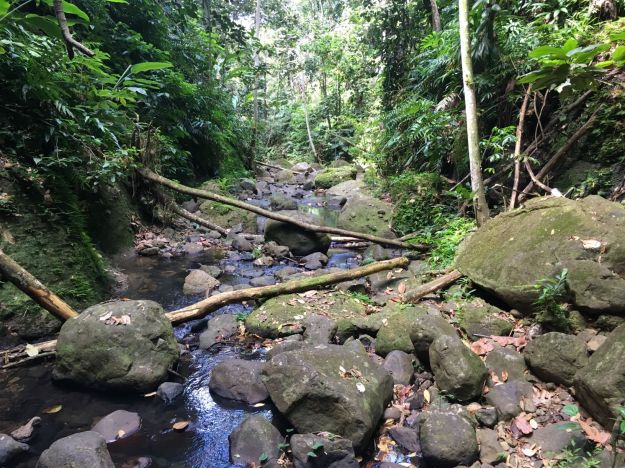
We snorkeled there twice then sailed north to the town of Deshaies.  There we hiked up the Deshaies River, a 2 ½ hour mostly boulder scramble in the river bed up to where the river came out of a cave.  An interesting hike including watching leaf cutter ants marching along carrying chunks of leaf many times larger than themselves.  After a hot walk back down and lunch in town we relaxed on Wally for the rest of the afternoon.
DeshaiesBouldering.small

DeshaiesRiver.small

MarcyatFalls.small

JandMatRiver.small

DaveatFalls.small


SandDDeshaies.small

LBDDeshaies.small

PiratesDeshaies.small

DeshaiesSunset.small

On March 15 we sailed 9 hours down the west coast of Guadeloupe and around the southern end and to Ilet de Gosier, 3 miles east of the city of Pointe a Pitre.  Just after we anchored the sky let loose with a hard rain, just what Wally needed to get the salt off.  It didn’t stop us from having sundowner martinis!

MartiniIlletdeGosier.small

MartiniIletdeGosier2.small

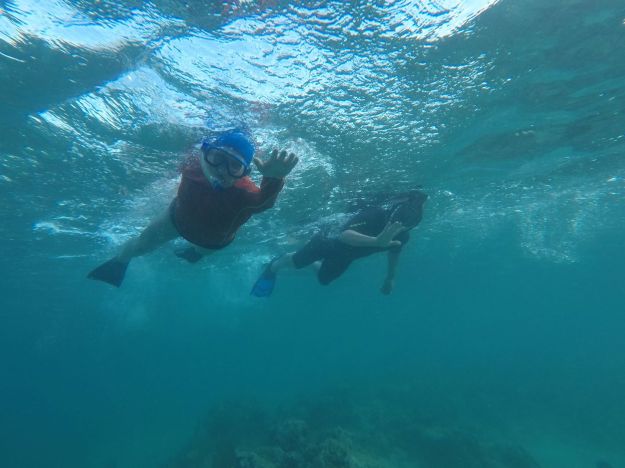
The next day we did an early morning snorkel and walked around the island.
GoProOffIletdeGosier.small

GoProBrainCoral.small


OnLighthouseIletdeGosier.small

GoProIguana.small

We then motored in to Marina Bas-du-Fort in Pointe a Pitre and said goodbye to John and Marcy, whose vacation had unfortunately come to an end.  Dave and I got a slip at the marina for a few days of cleaning up and boat projects, and planning for our next adventures.
 

Our Intro to the Caribbean

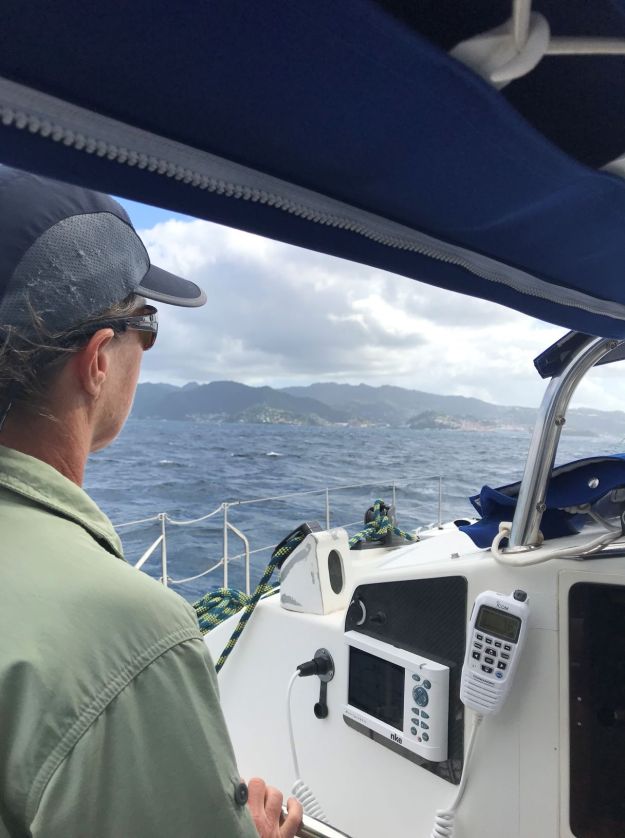
We arrived at the town of St. Georges on the island of Grenada on Christmas Day 2018, fulfilling our goal of “Christmas in the Caribbean” – that Jimmy Buffett song had been running through our heads for months!

GrenadaArrival.smallAfter Dave did the formal check-in to the country we said goodbye to our crew members Kevin and Jeanne Walker, with rum punch! (of course).
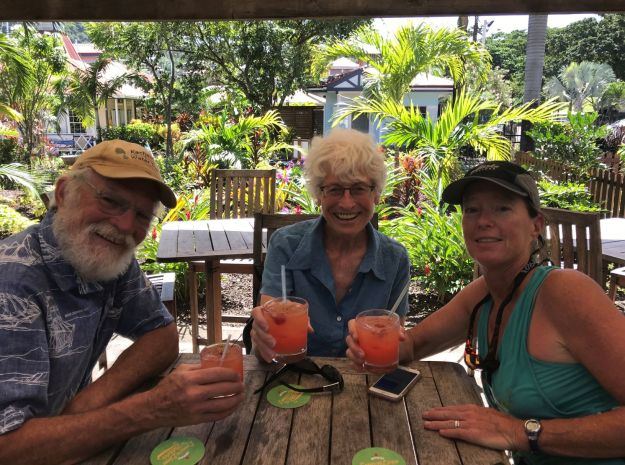
KevinJeanne.small

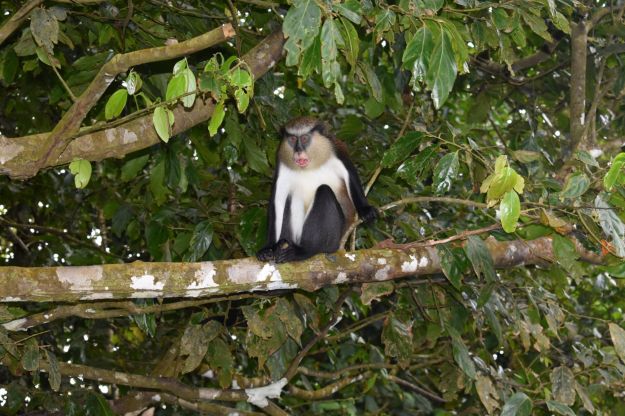
An hour later we rendezvoused with our Alaska friends Dana, Mike and Piper who came down to visit with us and spend the holidays. The 5 of us explored the island of Grenada for 2 weeks and found it to be a beautiful and friendly place. One of our adventures was visiting Grand Etang National Reserve. Grand Etang translates from French as “Big Pond”. It is a volcanic crater lake and is the largest body of fresh water on the island, about ¾ the size of Jewel Lake in anchorage. There we went hiking and saw a few mono monkeys in the trees.


MonoMonkey.small

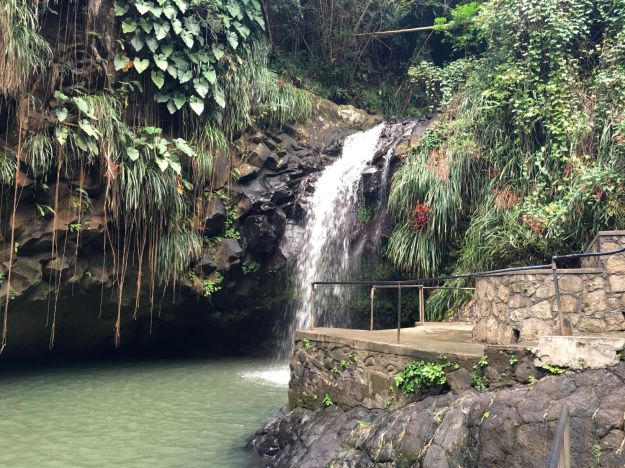
On the way back we took a short hike to Annandale Falls for a cool swim.

AnnandaleFalls.small

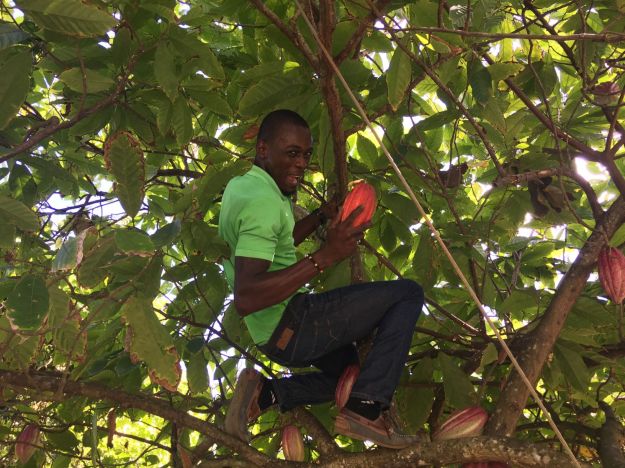
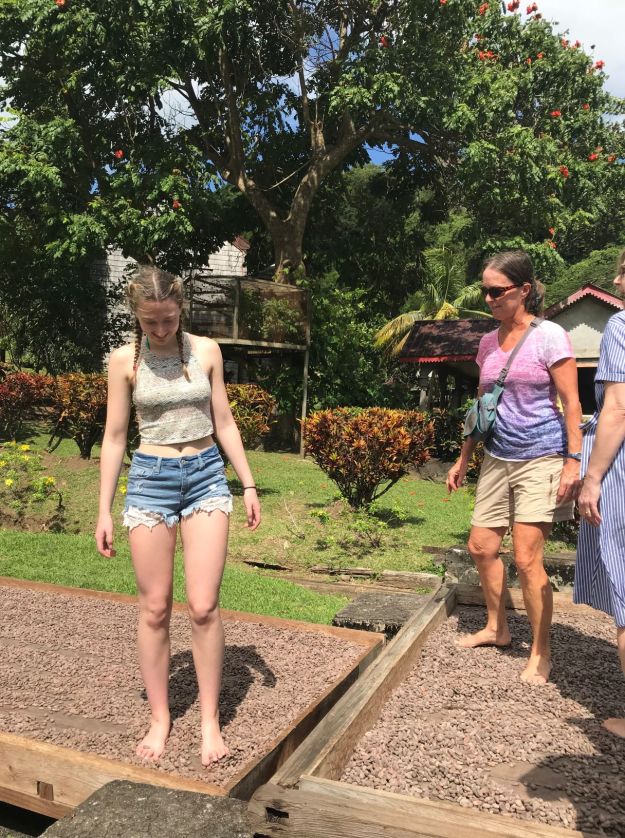
Other highlights included a tour of Belmont Estates which is primarily a full cycle chocolate factory where they grow their own cacao trees, harvest and ferment the beans, dry them in big bins in the sun (the ladies got to walk on them to help the drying process), then create lots of different chocolate goodies for sale, several of which we had to sample of course.  They also have a goat dairy where we saw goats being milked, big tortoises and a talking parrot, and groves of various fruit trees and a new small test field of vanilla.

Belmont.small

CacaoStomp.small

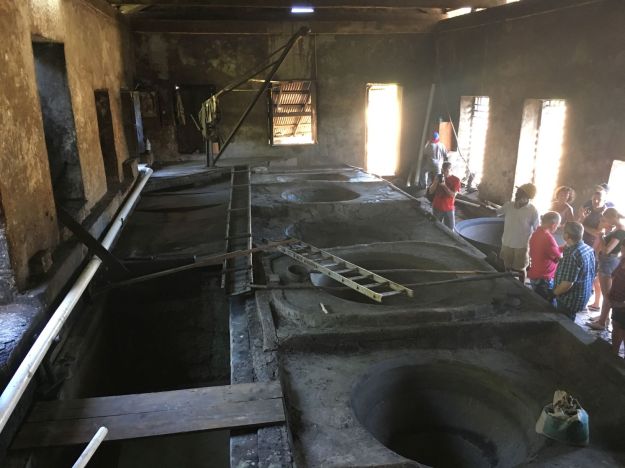
Later we drove to the nearby River Antoine rum distillery that has been in operation since the 1800s and still uses its original equipment including a water wheel (built in the 1800s) that brings in water from the adjacent river. Their process uses the dried waste sugar cane stalks as fuel for heating the cane juice. This quite thoroughly permeates the rum. It is also 150 proof. We bought a couple bottles but back on the boat we realized it’s so strong and burned tasting it’s pretty much undrinkable.  We ended up using it to kill ants and it is quite effective!

Rum.small

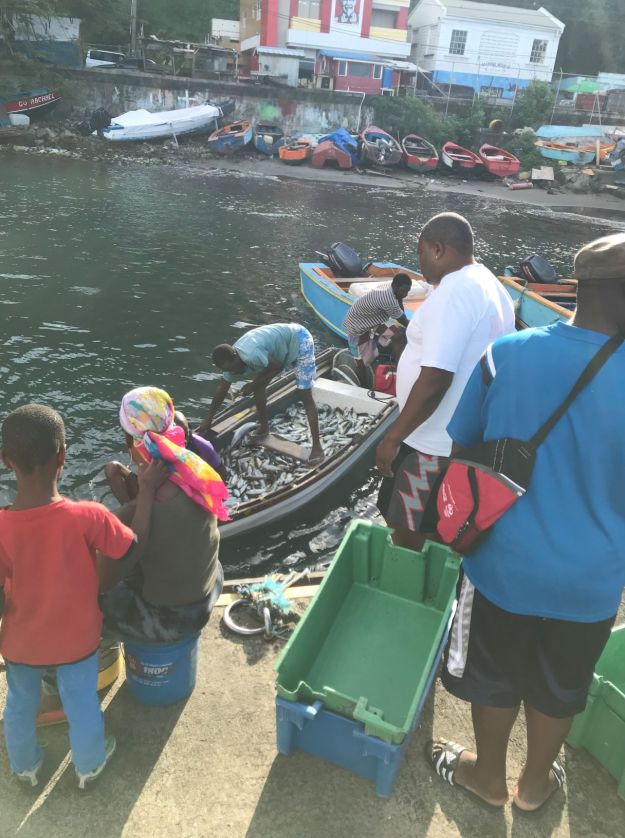
The St. Georges fish market gave us some good local flavor.  We were told to get there early in the morning before they sell out, so we got there at 7:30, but there wasn’t much left.  A lady told us to walk down to the dock and wait a few minutes, a boat was coming in with a load of jacks.  Not knowing what jacks were, we waited, and when the boat appeared it was full to the gunwales with fish. After struggling through the crowd unaware of the protocol for buying fish a local guy offered to help.  He said give me $20 EC (Eastern Caribbean dollar, about $6 US) and I’ll get you some fish.  So, we took the risk that he wouldn’t take the money and run and gave it to him.  He pushed to the front of the crowd and came back with a bag of 13 fish!  We offered to give him some for his trouble but he declined.  We cooked them up that night and found that they had a nice flavor but also have so many tiny bones we spent most of the time picking bones out of our teeth.  After the 2nd meal – no more jacks for us.

FishMarket.small

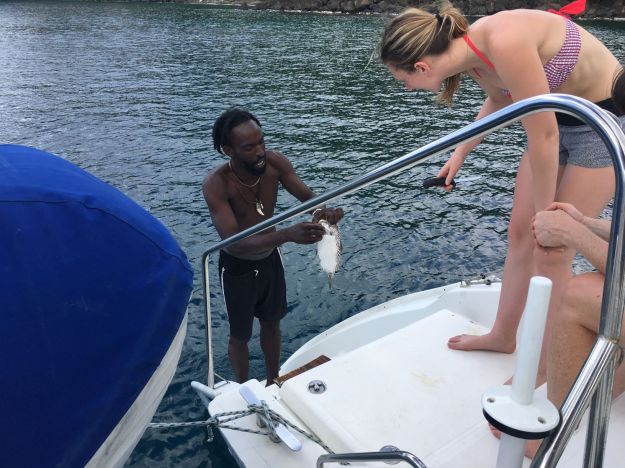
By New Years Eve we had moved to the south side of Grenada and went snorkeling and paddle boarding in a few different places.  Later we went back up the west coast and anchored near Halifax Harbor at a place we dubbed “Jake’s Beach” because Jake, a local fisherman, rowed up to our boat with fresh lobster and puffer fish for sale.  Jake said the puffer fish wasn’t the poisonous kind, and he offered to skin and clean one for us so he did, and we bought the puffer and 2 lobsters.  We had the lobsters for dinner that night, but after doing some research and realizing the consequences of eating what we didn’t actually know was not a poisonous type of puffer, we chickened out and threw it back to the sea.

Jake.small

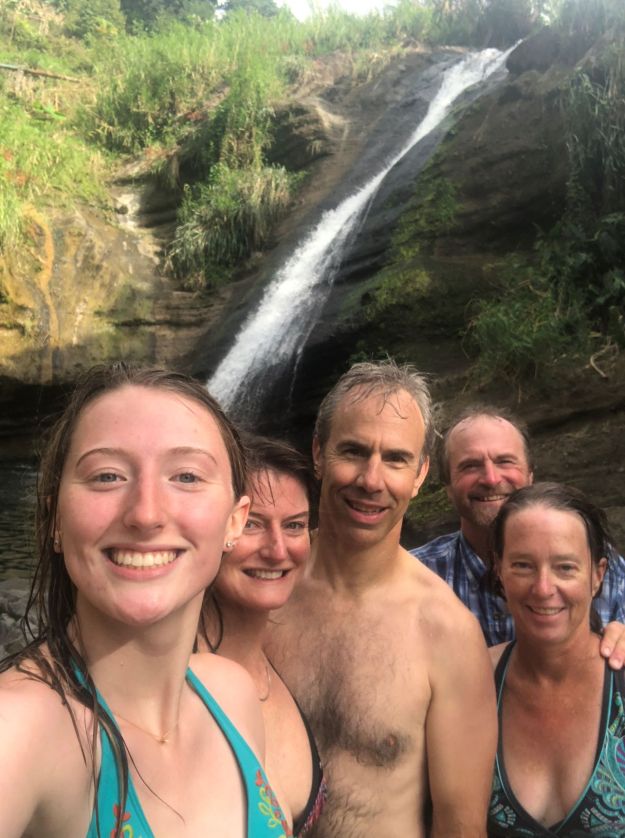
The next day we hiked to Concord Falls, a hot uphill hike of about 3 miles where we all swam in the delightfully cool water.

ConcordFalls.smallGangatConcord.small

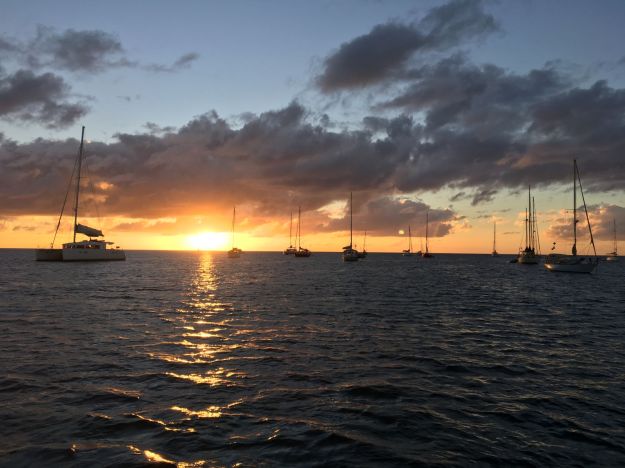
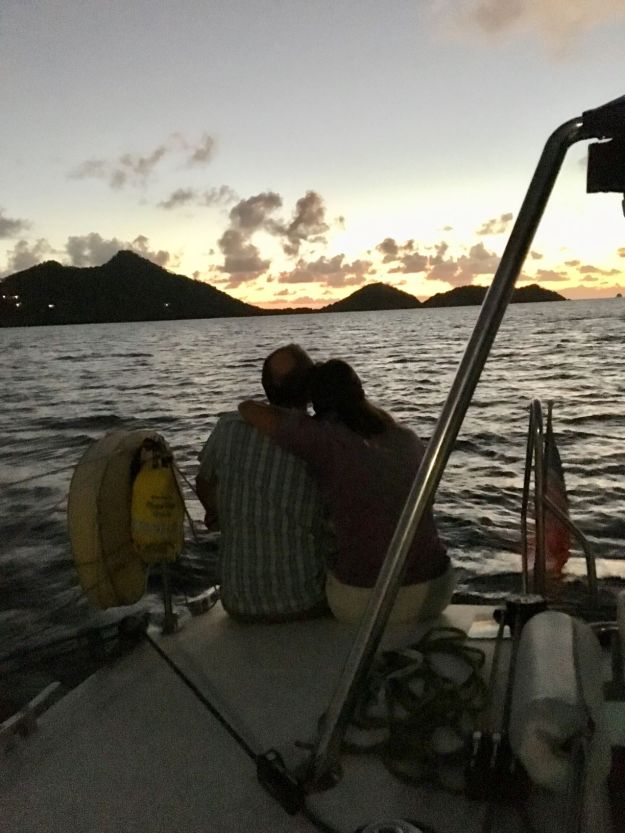
On January 7 it was back to St. Georges for our guests to fly home.  We loved having them but were also happy to have some time to ourselves after having crew and/or guests with us every day for the last 2 months! Over the next few days we decompressed and got some provisioning and other chores done, including rinsing out salty gear from our crossing.  We are enjoying a new tradition of watching the sunset from the stern steps and Sundowners.  One of the many things we love about the Caribbean!

Sunset2.small

Next we sailed north to explore Carriacou, one of the 3 larger islands owned by Grenada.  As we started the anchoring process in Tyrrel Bay we discovered we couldn’t shift the port engine into reverse – the shifter cable on the port engine was broken. Engine off, finish anchoring with only one. Once again our tendency to avoid tight mooring fields and choosing to anchor on the fringes pays off. Dave was able to rig a way to shift manually from the engine compartment as a temporary solution until we could find a new cable (bailing wire and a boat hook- no bubble gum needed this time).  It’s good to have 2 engines!
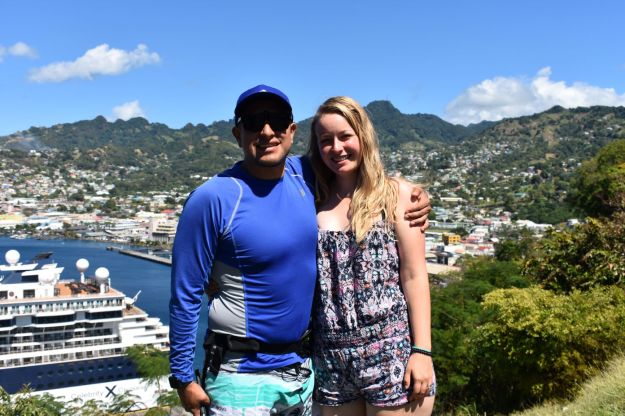
OffTheHook.small

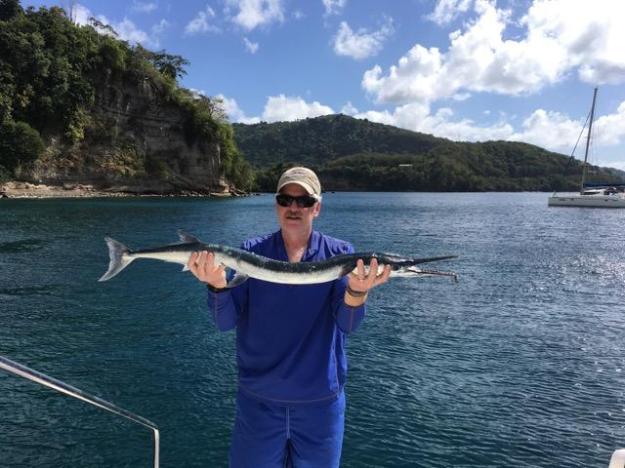
By January 15 we were back at St. Georges, Grenada, to pick up our Alaska friends Amy and Cal who visited for a week.  While waiting for their arrival we went to the local chandlery, Island Water World (sounds like a theme park but it’s a marine hardware store).  There we were able to find the exact shifter cable we need for the port engine – amazing! However, since it looked like a huge undertaking we held off on the replacement job since the temp fix was easy to use with extra crew. With Amy and Cal on board we moved back to Jake’s Beach and the next morning we all hiked up to Concord Falls again but this time continued on to the upper falls which is more remote; we were the only ones there.  After a refreshing swim we hiked back down and bought a big needlefish and a lobster from Jake.  So nice to have fresh fish delivered right to our boat!
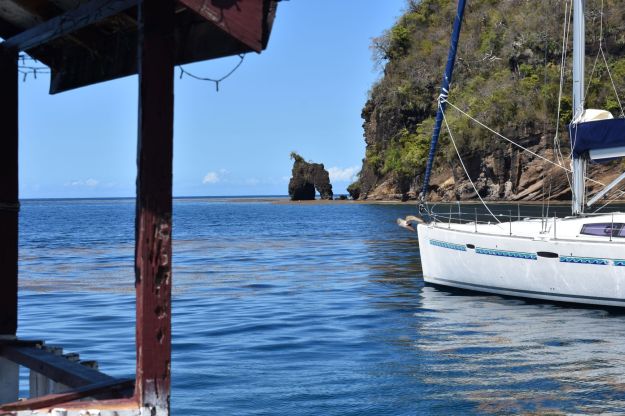
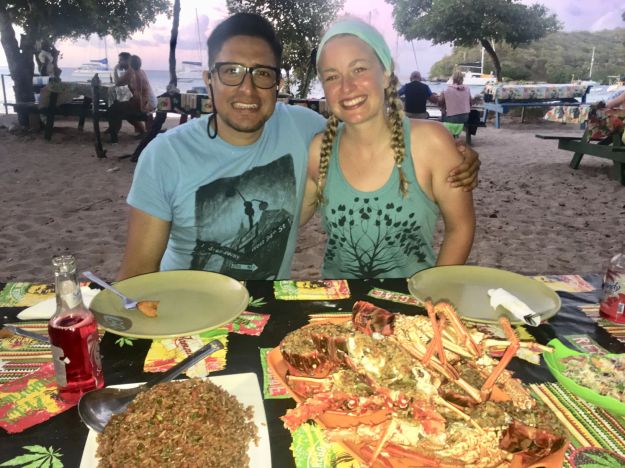
needlefish.small

SunsetDandS.small

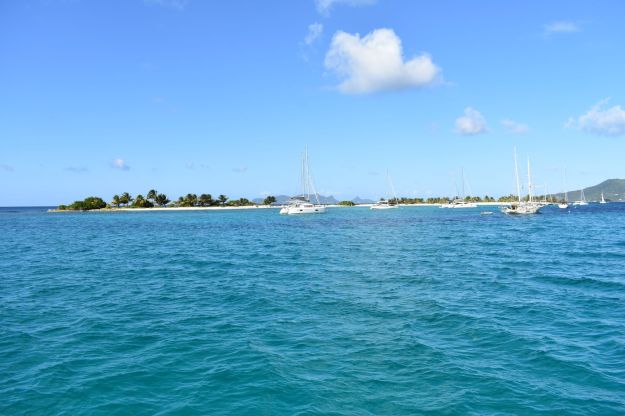
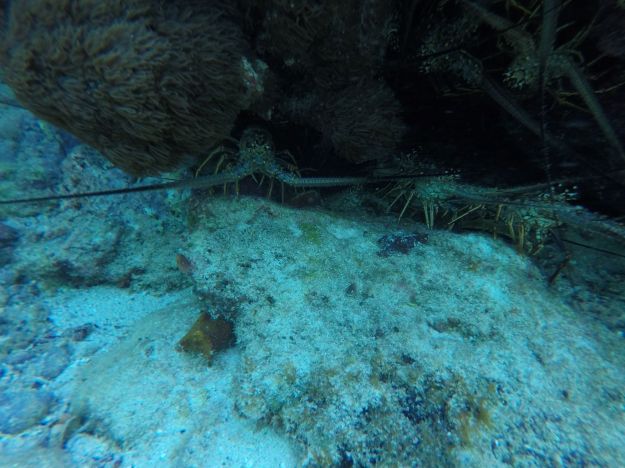
The next morning we sailed up to Carriacou and this time anchored off Sandy Island, known to be a good snorkeling spot.  And it was!  We tested out our GoPro underwater for the first time.  Beautiful spot with tons of fish.

BtwGrenada_Carr.small

amysailing.small

SandyIsland.small

Lobsters.small


Then we took a tour of the island by taxi.

viewfromhospital.small

GangCarriacou.small

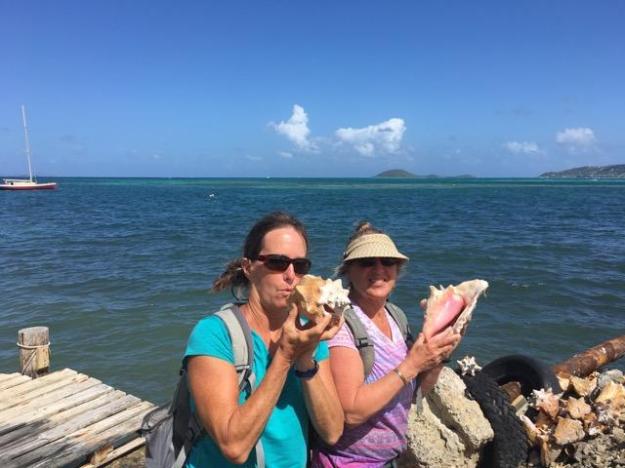
conch_blowing.small

During the week Cal took charge of fishing using a hand line off the stern and his fly rod, using some of the lures he created himself.  We ate well!

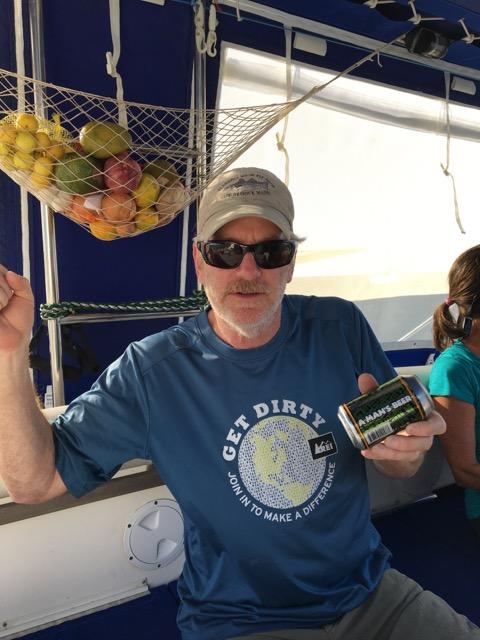
CalBeer.small

After we sadly said good bye to Amy and Cal we stayed at St. Georges for a few days so we could tour a boatyard where we are considering leaving Wally Walou this summer, and so we could replace the broken shifter cable, a project which morphed into replacing shifter and throttle cables on both engines. For context the “short” cables to the port engine are 22ft long and the starboard cables are a whopping 40ft!  Luckily it turned out to be a MUCH simpler operation than anticipated and we finished it in just a few hours.

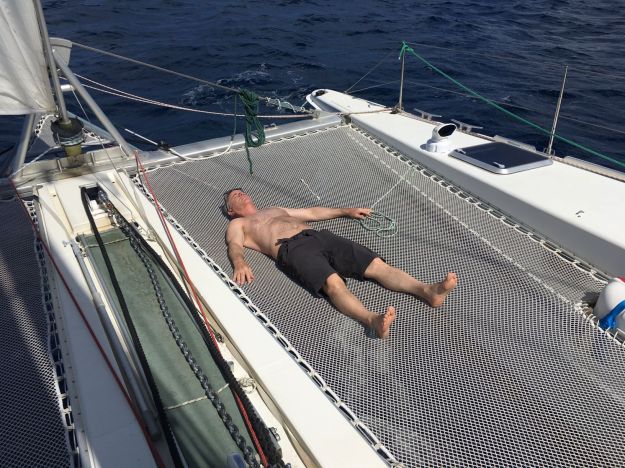
On January 28 we sailed north to the third large-ish island owned by Grenada; Petite Martinique.  We anchored there and for the first time were directly exposed to the westerly trade winds at anchor.  We saw winds in the upper teens to upper twenties all night, which at the time we thought was excessive.  Since then we have learned that is the norm here in the Caribbean unless you are behind a high obstacle.  We are thankful over and over again that we have invested in good trustworthy anchoring gear! With the hook in solid and our long bridle, Wally sits quite happily at anchor in winds into the 30s.

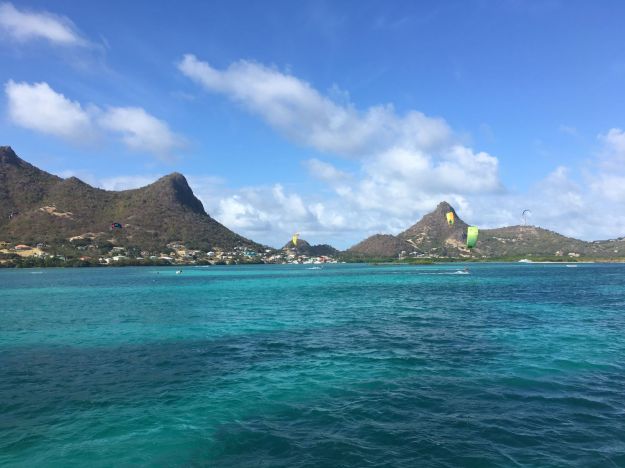
The following day we sailed northwest a short distance to Union Island, the southernmost island owned by the country of St. Vincent and the Grenadines.  We anchored in an uncomfortably crowded anchorage surrounded by reefs, and it took 3 tries to anchor where we were far enough away from other boats to feel secure.  Dave checked us in to the country of St. Vincent and we watched numerous kite boarders flying around.  This south end of Union Island is protected by reefs which block the waves so the water is relatively flat but there is little (nothing!) to stop the wind, so it’s perfect kite boarding conditions.  We spent 2 nights there then sailed about 30 miles north to Blue Lagoon on the island of St. Vincent.  Waves were rough as we passed through an area our guide book says can have waves like “liquid mountains”.  But we arrived safe and the harbormaster led us through a very narrow entrance bordered by shallow reefs. Depth sounder was showing 1.6 meters (5’3”) through the passage. We draw about 4’7”… so kinda shallow!

BlueEntrance.small

On February 2 we took a taxi to the airport to pick up most awesome daughter Danielle and her husband Ivan.  We took an island tour which included the excellent Kingstown Botanical Gardens, and Wallilabou Bay where parts of “Pirates of the Caribbean” was filmed.

DaniIvan.small

Pirates.small

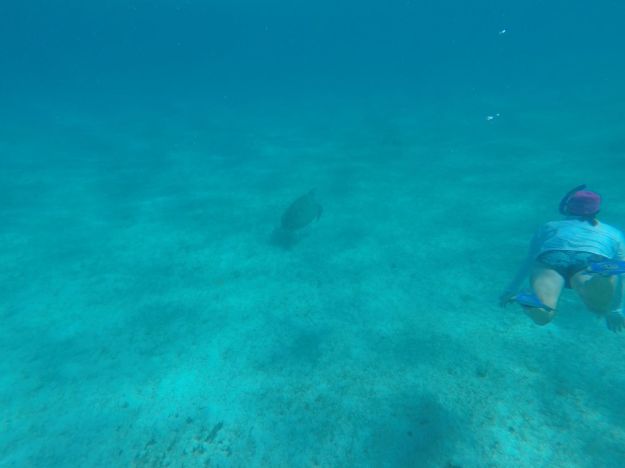
Then we sailed south to Tobago Cays.  We anchored just inside Horseshoe Reef, a spectacular spot!  A highlight was snorkeling in an area reserved for sea turtles.  We saw numerous turtles there.  With winds picking up we relocated to a more sheltered area and went to a beach barbecue dinner of lobster, plantains, and other local delicacies – yum! Then it was back to St. Vincent to say farewell to Danielle and Ivan.

BBQD_I.small

Turtle3.small

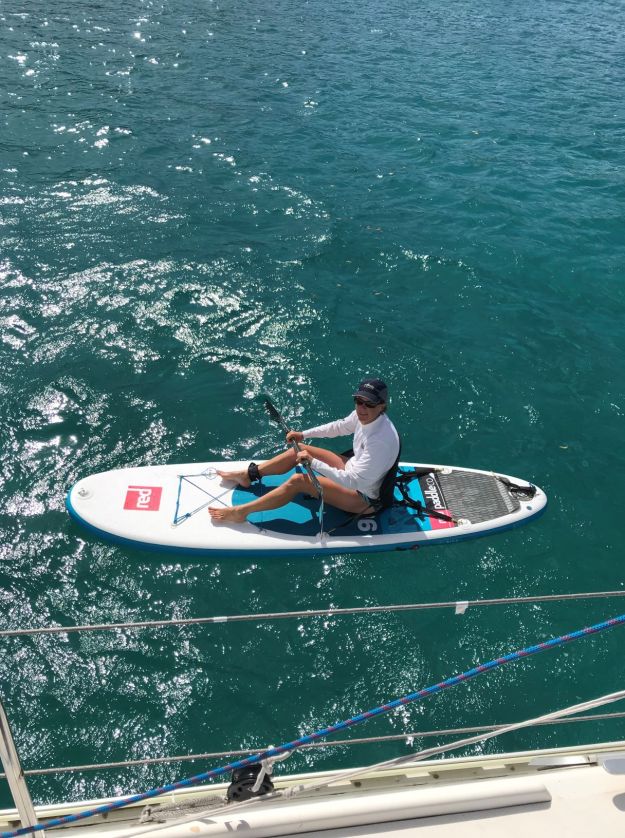
On February 11 we sailed downwind to Admiralty Bay on the island of Bequia, a beautiful spot with a walkway along most of the bay (smaller liquid “hills” this time YAY!).  This was the calmest anchorage we had been to in a while so we pulled out our “kayaks” (seats clipped to our SUPs) and paddled around the bay.  It’s nice to have an optional way to use our SUP boards in windy weather or rough seas.

Kayak.small

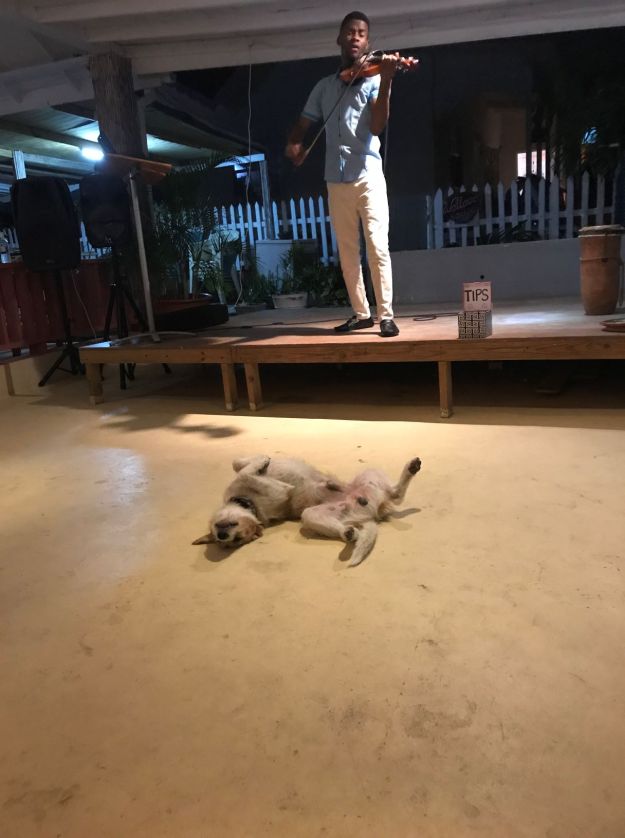
We stayed at Bequia 4 nights and did lots of snorkeling.  One evening we went out to dinner and were entertained by a young man playing the violin with his smitten fan on the dance floor.

Violin.small

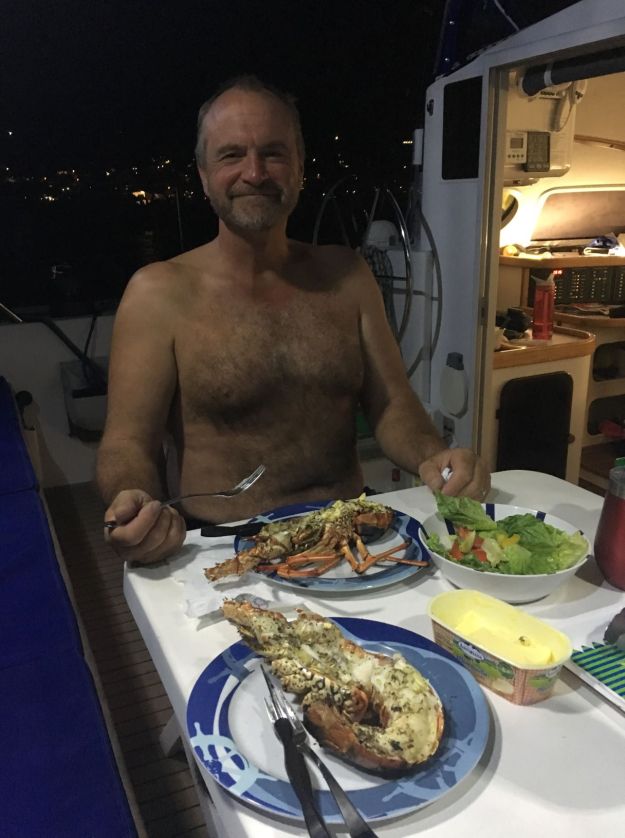
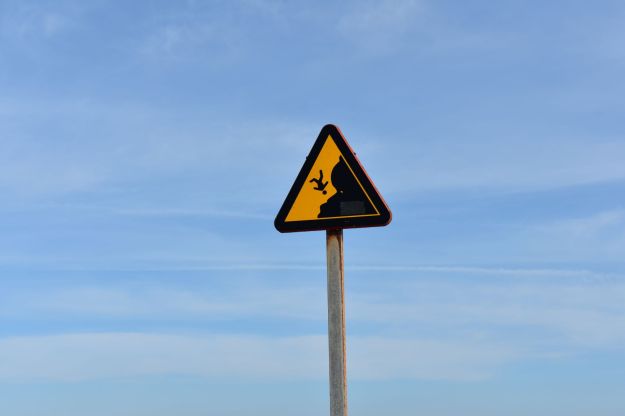
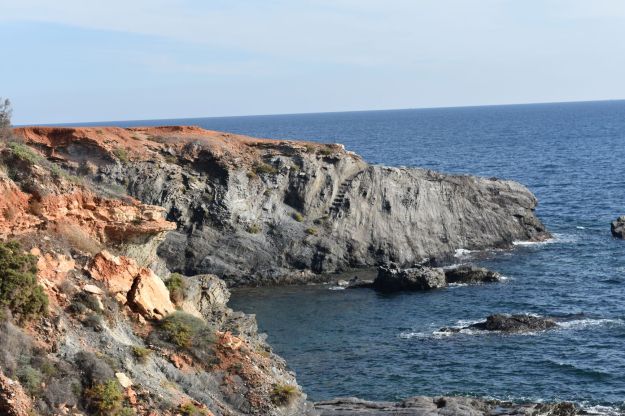
On Valentine’s Day, also our 4-year wedding anniversary (!) we hiked to Friendship Bay on the other side of the island.  On the way back we missed a trail that circumvented a cliff and we ended up swimming around the cliff (50 yards) to the beach on the other side. We came out of the water about 50 ft from the end of the trail that we had missed 😉.  Good thing we have a waterproof backpack. We walked to the nearby Jack’s restaurant and had lunch in our soaking wet clothes (hooray for warm temperatures!).  Back at Wally Walou we grilled the lobster we had bought that morning – awesome celebration! We now know how to keep the lobsters alive with a mesh bag over the side.

VDay.small

The next day we sailed south to the island of Canouan and anchored in Rameau Bay just north of the main town of Charlestown.  A nice quiet anchorage with good snorkeling right from our boat.  Two days later 5 charter boats came in and anchored right next to us:  time to go!  We were planning on leaving anyway as we had reserved kite boarding lessons at Union Island.  So we left and anchored off the leeward side of Frigate Island on the south side of Union Island.  Four out of the next 5 days we took lessons with Happy Kite.  It’s a steep learning curve but by the end of day 4 we both thought we “got this”, just need lots more practice!  Next step kiting gear!

FrigateBoarding.small


Our Atlantic Crossing

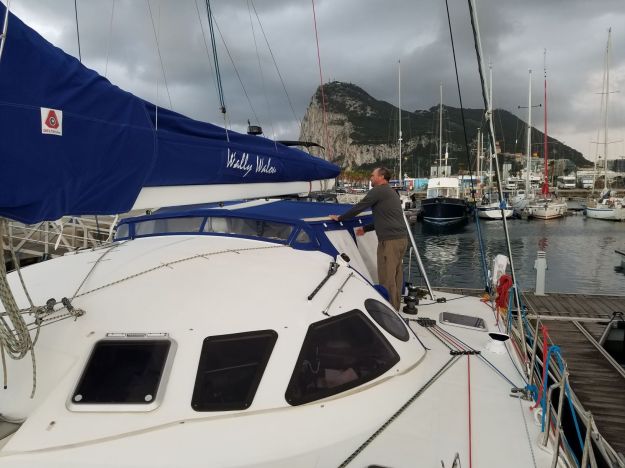
Our stay at the Alcaidesa Marina (in Spain) just about 400 yards north of Gibraltar lasted longer than anticipated due to unsettled weather in the Atlantic Ocean that prevented our departure westward. Many boats were stacked up waiting for the unusually high number of low-pressure systems to move through the area and open a weather window to the west and south.  During our 2 weeks there we continued to prepare Wally Walou for our crossing.

wally_rock.small

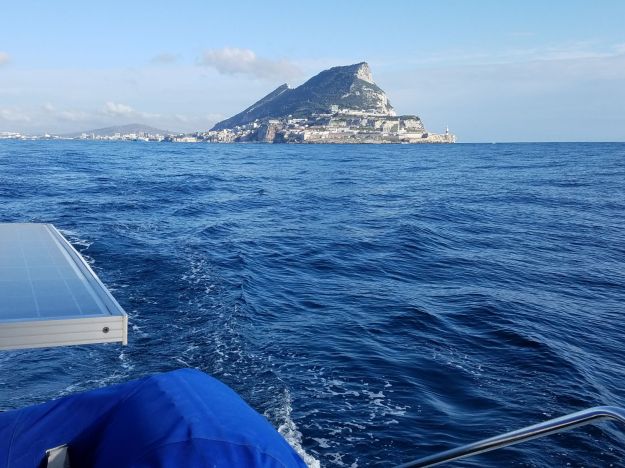
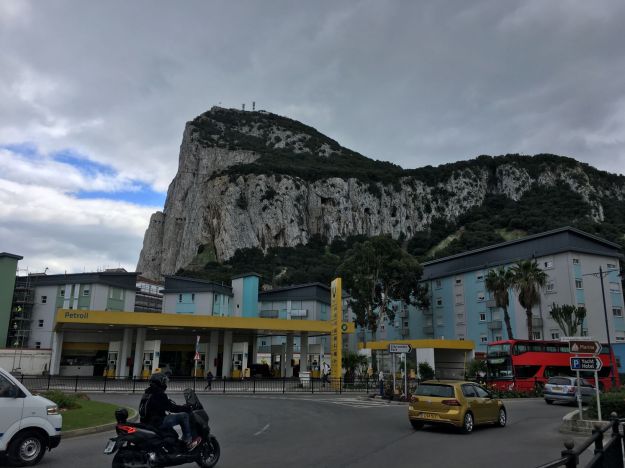
Prior to researching our visit to “Gibraltar” Dave had wrongly assumed that the British controlled area was the whole bay including the “Rock”. He was quite surprised to learn that the British controlled territory is only “The Rock” plus a few hundred yards that they have been diligently expanding with tailings from various digging projects.

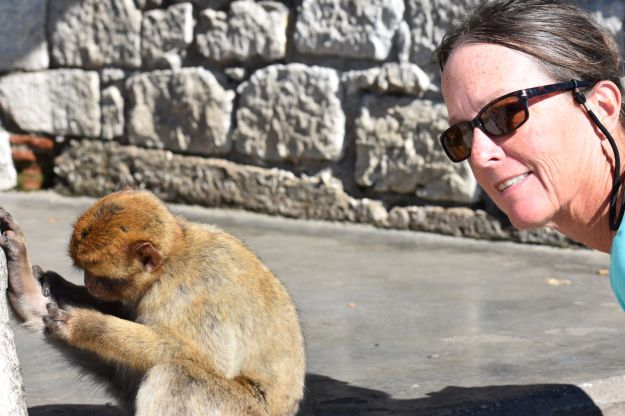
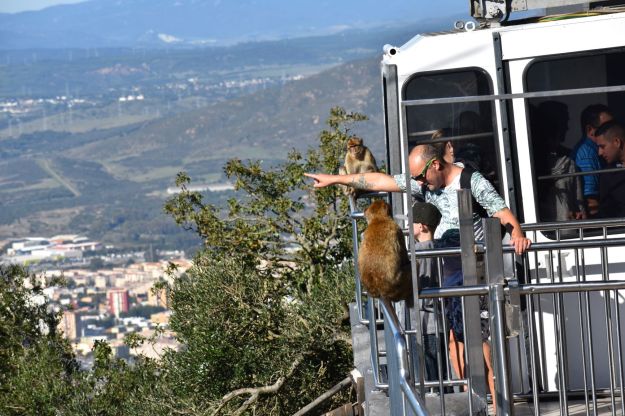
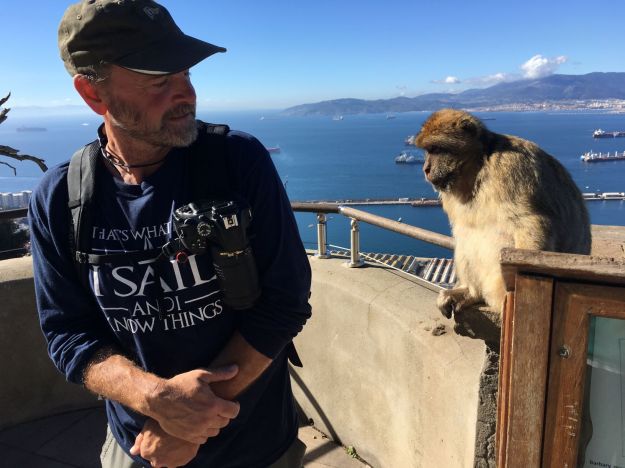
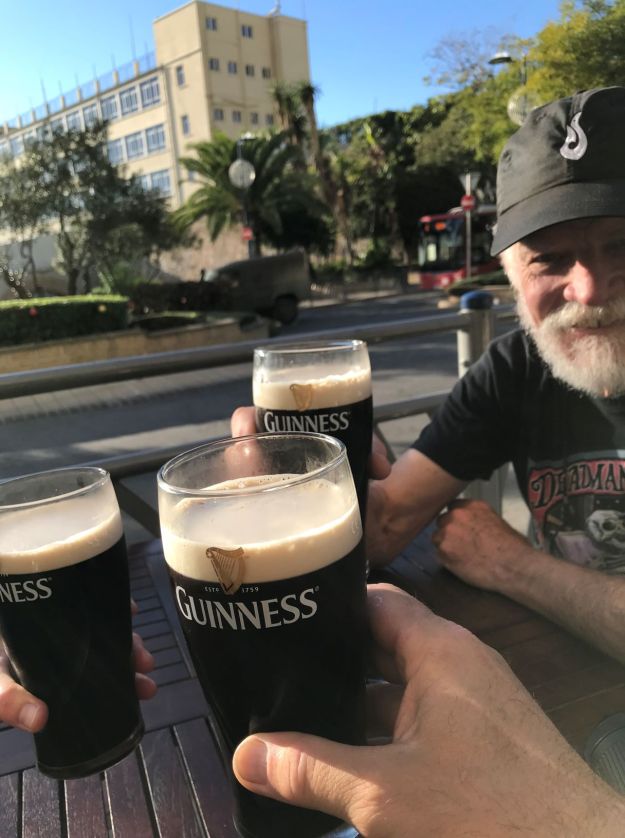
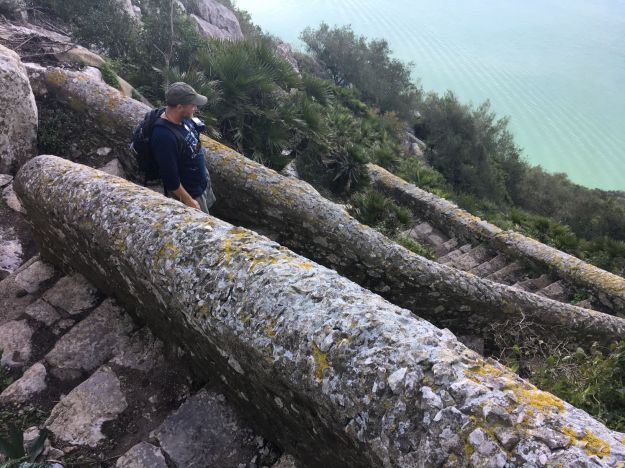
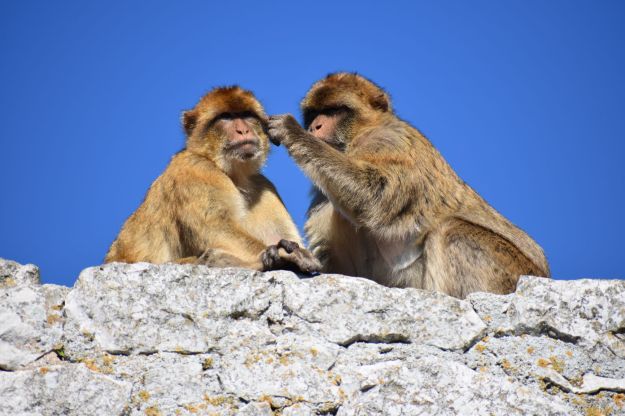
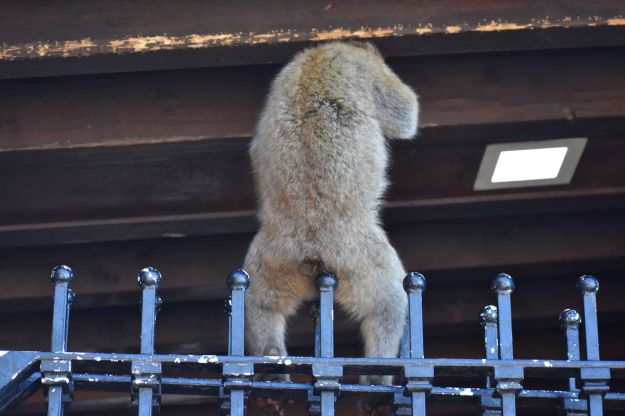
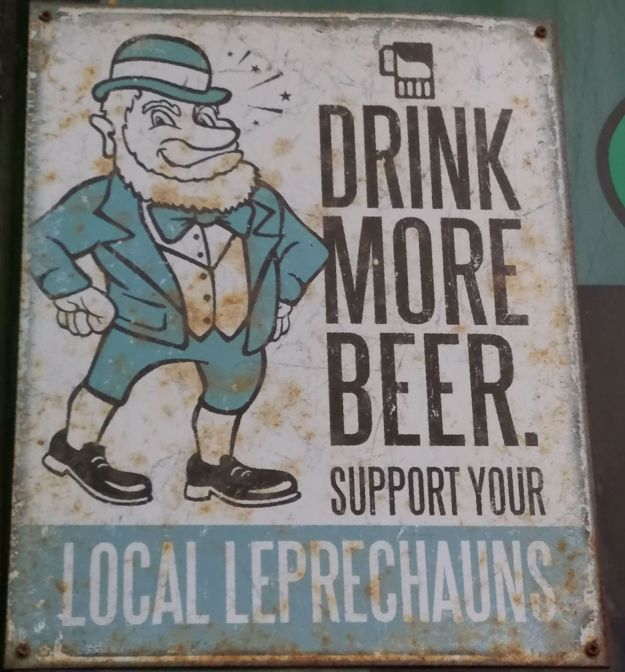
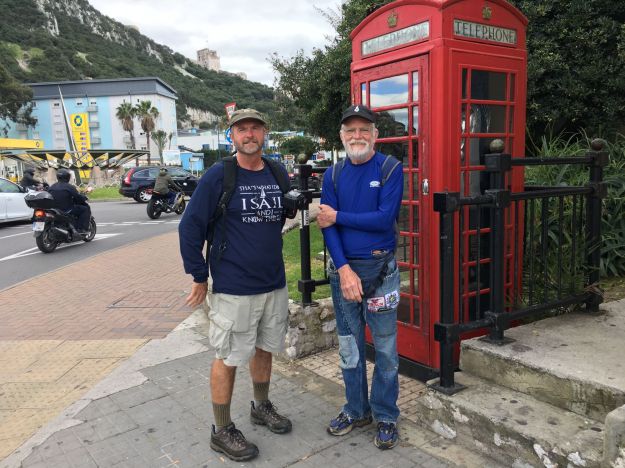
On a sunny Sunday we decided to hike up the Rock of Gibraltar. After flashing our passports at the border officials we entered the country by walking across the airport runway, a border crossing unique in the world to our knowledge. We twisted our way up and around narrow streets to the top of the Rock. There we enjoyed spectacular views and the unique Barbary Macaque monkeys that live there.  Later we took the Mediterranean Steps down, a steep and ancient stone stairway.  Near the bottom was a British pub so, after quaffing the requisite pints of Guinness Stout, we made our way back to the marina. We totally scored with the weather, after this day there was not another clear calm day while we were there.

sallymonkey.small

runwaycrossing.small

monkeyshoo.small

monkey.smallguiness.small

medsteps.smallsallydave.smallgrooming.small

buttscratch.small

beersign.small

We started talking with other sailors about weather forecasts and routing options.  Some were leaving in the next day or so to head south and hug the west African coast where the weather was forecast to be favorable.  We considered that option but heard from another couple about running into unlit fishing boats and nets up to 30 miles offshore, so we decided to stay a few more days and wait for the weather to facilitate our original plan of sailing directly to the Canary Islands.

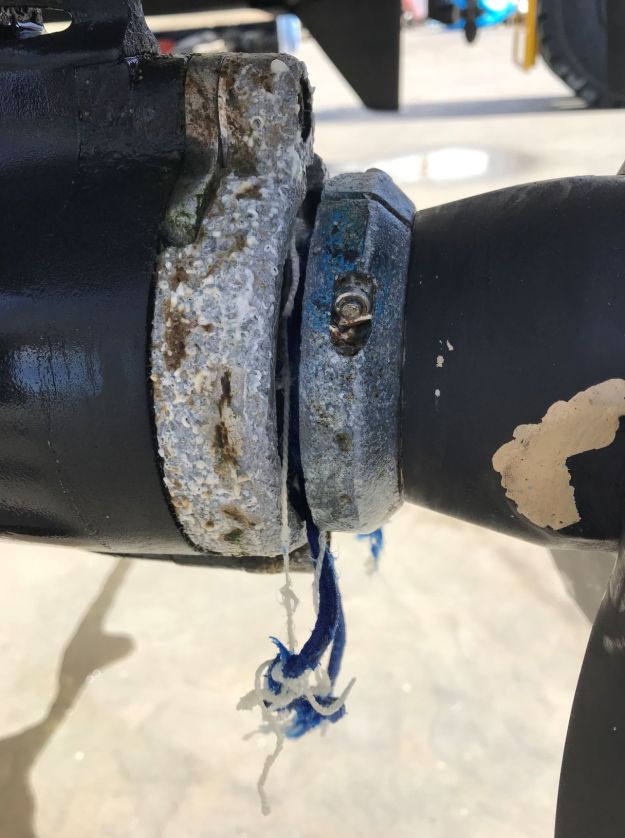
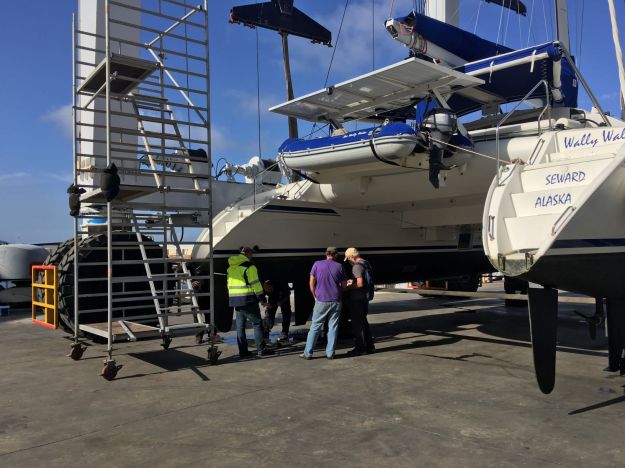
A project we needed to accomplish soon was to extract the fishing line wrapped around our port sail drive and replace the compromised oil seal.  The boat lift at the Alcaidesa Marina was not big enough to lift Wally Walou safely but the harbormaster recommended a boatyard at the Spanish city of Ceuta, on the North African coast just south of Gibraltar.  Who knew Spain owns land on the Moroccan coast? So on the morning of November 15 we motored a couple hours south across the Straits of Gibraltar to Ceuta. The boatyard there lifted Wally, pulled out the fishing line and changed both oil seals, and was done by 5 pm.  The next morning we went into the office to pay and they informed us they only take cash! But they would be happy to give us a ride to an ATM. So after successfully accomplishing that feat we splashed back in the water and moved to the adjacent Hercules Marina.  There are numerous statues of Hercules around Ceuta and we learned he is a local hero because he personally carved out the Straits of Gibraltar with his bare hands – bravo!  That day we took a long walk around Ceuta, a city of mixed Spanish and Moroccan culture, and enjoyed a delicious traditional Moroccan meal at a hilltop restaurant.

toceuta.small

hikeceuta.small

fishingline.small

ceutaboatyard.small

The next day we sailed back toward Gibraltar through rainy and gusty weather, dodging cargo ships and tankers.  The Rock has a big influence on the local weather, causing rapidly changing wind speeds and directions, which makes it challenging to maneuver among the numerous large ships there.  We were observing the “Rule of Tonnage” so even though we were sailing we gave way to the MUCH larger vessels. Seemed prudent😊.

gibraltarweather.small

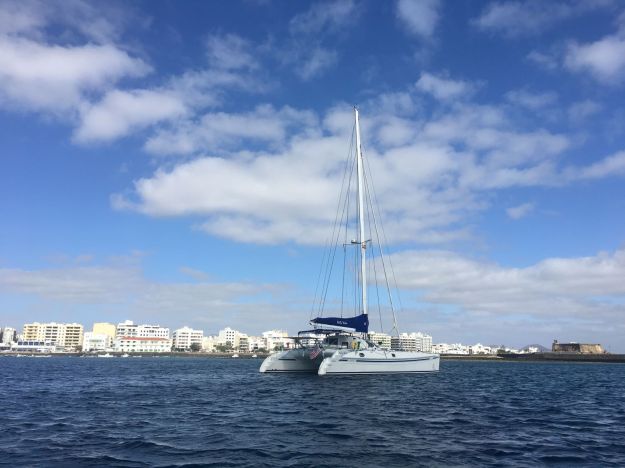
On November 21st we rented a car and drove a couple hours to the Malaga airport to pick up our crew member Jim Beekman.  The weather outlook had improved so the next day, the 22nd, we fueled up and left for the Canary Islands.  Hard to believe we were finally leaving the Mediterranean! It took almost exactly 5 days to arrive at the city of Arrecife on the east coast of the island of Lanzerote.  The crossing was relatively uneventful except for a night of rain and winds in the 30s when we purposefully motor sailed directly into a cold front to move towards more favorable winds. Except for that one detour we found the Atlantic sea states, with long wave periods of 9 to 11 seconds, to be much more relaxing than those in the Mediterranean with 2 to 3 seconds.

outofstraits.small

arrecife.small

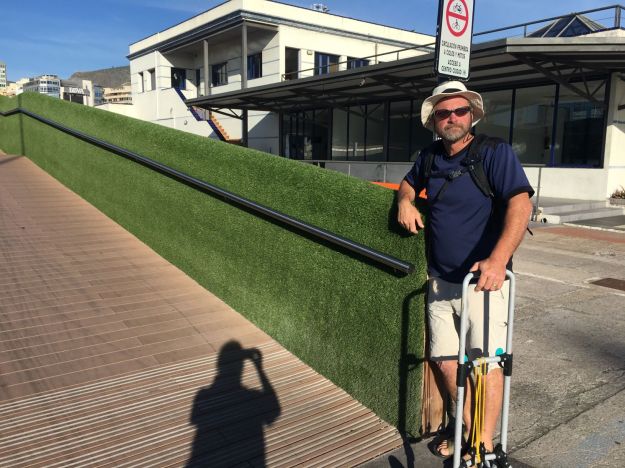
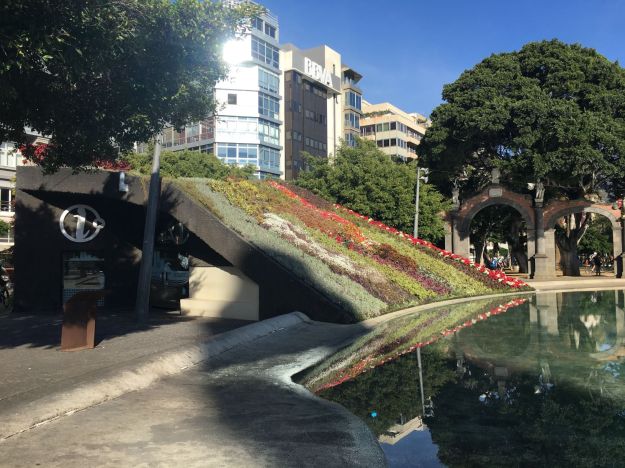
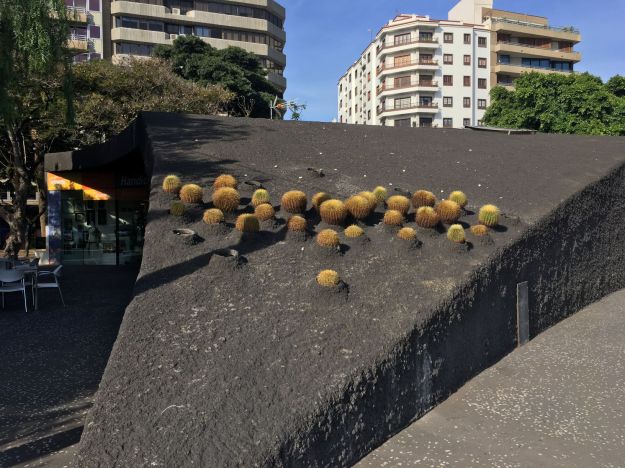
We anchored off Arrecife and took the dinghy in for an afternoon of grocery shopping and stretching our legs.  The next day we sailed down the east coast of Lanzerote then headed west. The weather was nice enough we were able to sit out on the bows in shorts and Tshirts – finally!  We sailed overnight to the island of Tenerife where we checked in at Marina Santa Cruz.  We stayed 4 nights in this city, eating good food and provisioning with groceries, boat parts, and fuel.  The marina is connected to the city by a relatively new elevated walkway with walls lined with AstroTurf. During our walks we admired numerous street sculptures and vegetated roofs.

skytocanaries.small

nakedmen.small

grassbridge.small

flowerroof.small

cactusroof.small

artsantacruz.small

Before we could leave the Spanish-owned Canary Islands we had to visit the immigration police to officially check out of the country. We waited through the weekend until the office opened Monday morning December 3. We checked out and received an official piece of paper to present at our next port of call and to prove we had not overstayed our visas that allowed us to stay in the Shengen Area. This was just 2 days before our temporary French residence cards expired. (For those who have been following our saga of applying for French residency, we still haven’t received anything back from the French government! Good thing we left.)

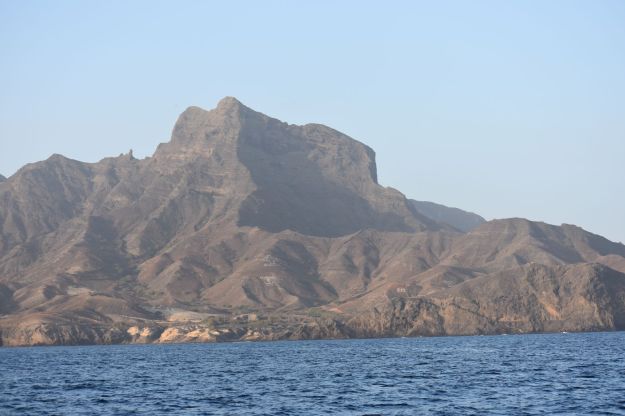
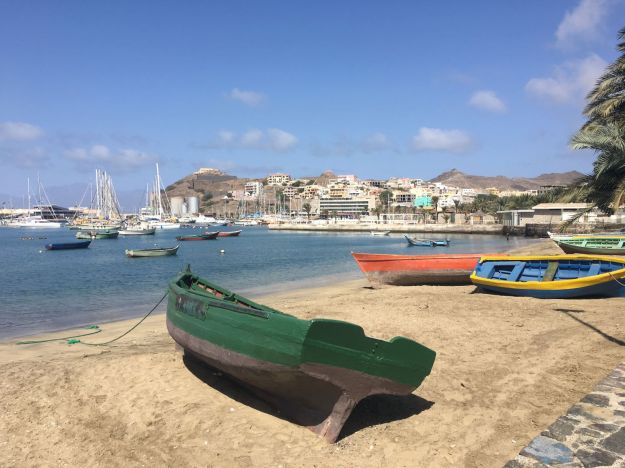
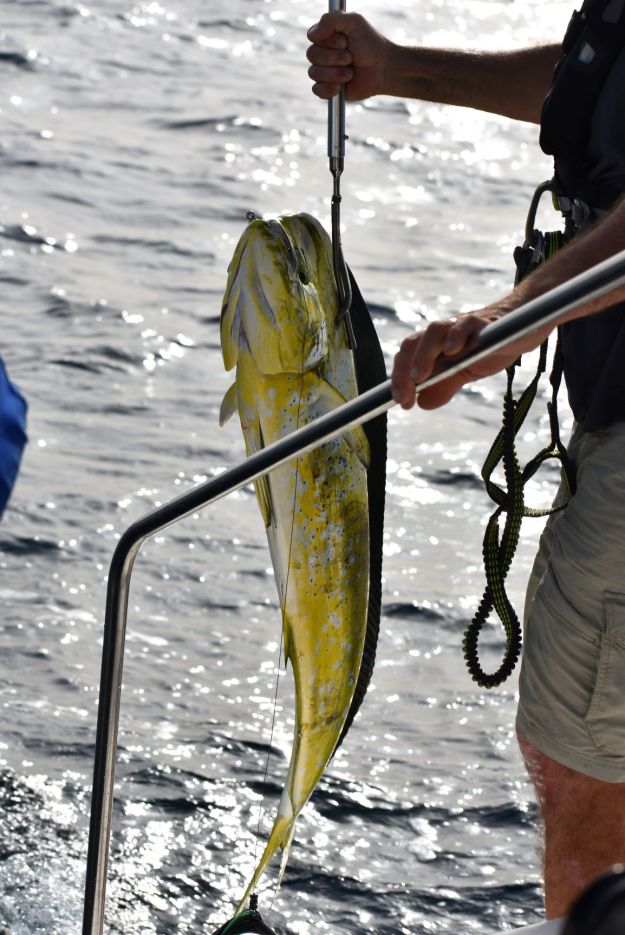
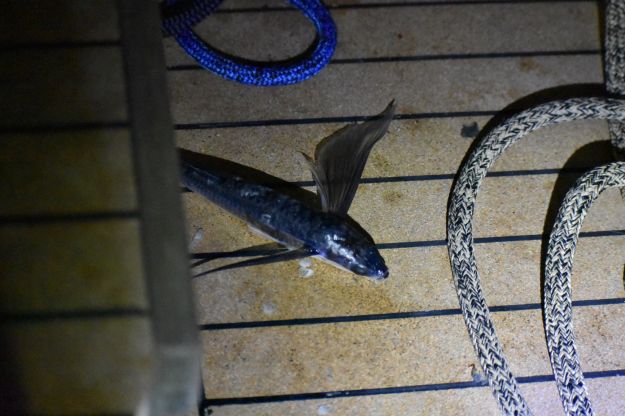
Along the way we decided to stop in the Cape Verdes Islands to refresh our fuel and groceries.  We arrived in Mindelo Marina on the island of Sao Vicente Monday morning December 10, a week after leaving the Canaries.  After checking in and out of immigration, washing the salt and Sahara sand off Wally, and stocking up on groceries, we set off for Barbados at 5:30 pm, staying only 9 ½ hours on the island.  But we wanted to arrive in the Caribbean to meet our upcoming guests.  The passage from the Canaries to Cape Verdes was relatively pleasant and uneventful except for the numerous flying fish that landed on our decks.  The highlight was catching a mahi mahi/dorado on a hand line!  A beautiful fish that Dave cut into several large filets.  That same day we saw a large (maybe 100) pod of dolphins next to us and swimming under our bows, and a group of unidentified whales swimming at the surface.  The weather was mostly warm, sunny and dry, and the sea state not too rough.

nearmindelo.small

mindelo.small

mahimahi.small

flyingfish.small

dolphinwatching.small

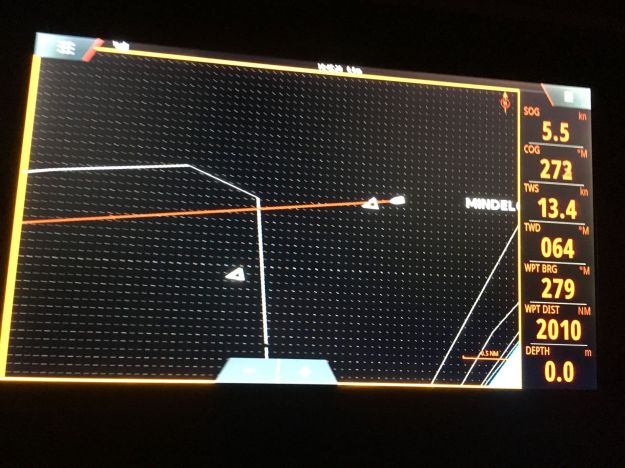
Our journey from Cape Verdes to Barbados, about 2010 nautical miles, took 13 days.  Barbados was our goal because it is the easternmost island in the Caribbean and upwind of the other islands.  The sea state was rougher than expected and the trade winds were regularly 20 knots and above, so it made for a rambunctious ride.  We learned to react to occasional squalls by furling the jib until the higher winds passed.  We sailed conservatively, decreasing sails at night to slow Wally down; he can go faster than we are comfortable with in the dark.

2012milesleft.small

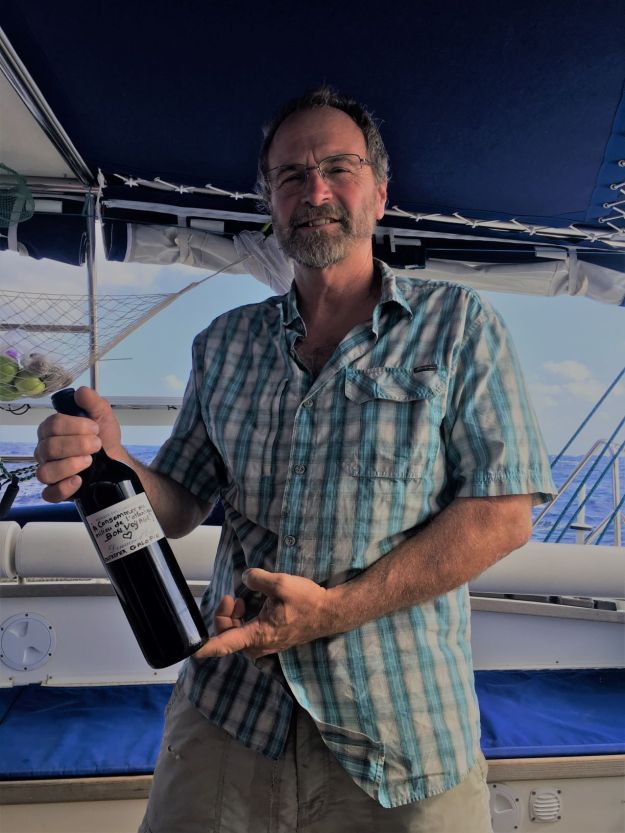
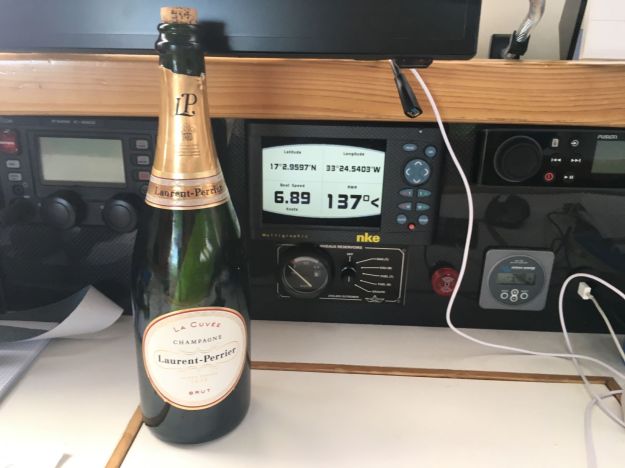
One of our “tasks” for the crossing was to toss over a “Message in a Bottle” that we and some of our dock mates in France created just before our departure. We decided to launch it at the point when we had traveled “Half of the distance West” from our Gibraltar start. We tossed it over and toasted its journey with a bottle of Champagne that Sylvie and Jean-Marie (Galopin) had given us for the occasion.

wine.small

msginabottle.small

bottlebyebye.small

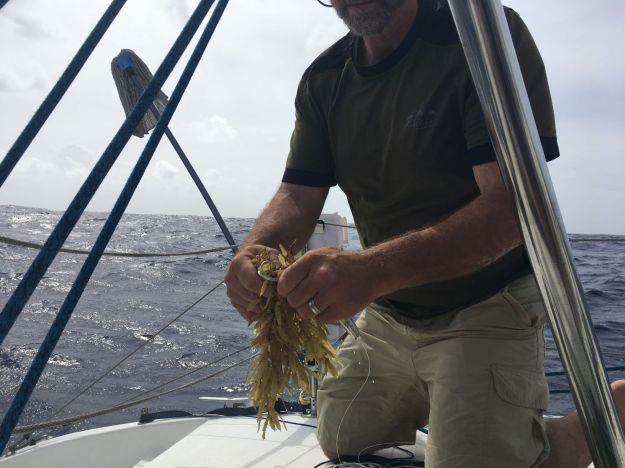
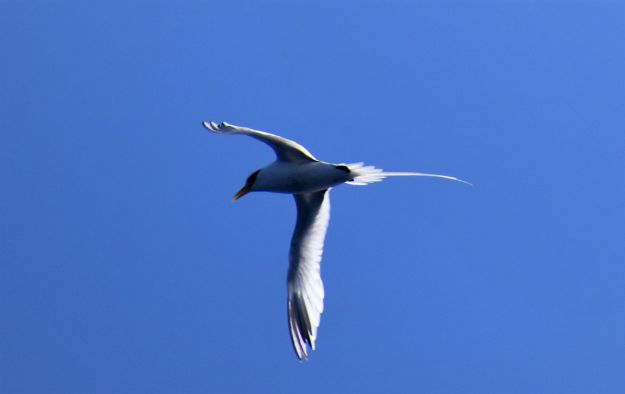
About 600 miles from Barbados we started seeing small patches of seaweed, then large rafts of it, then it was just about everywhere.  It was present all the way to Barbados. We weren’t able to fish because the seaweed kept getting caught on the lure. Jim, who has done this crossing several times before, said he’s never seen this.  Climate change?  Other than the seaweed our only company was an occasional solo Tropic bird, a white tern-like bird with a long skinny tail that would circle us a few times then fly away.

seaweed.small

tropicbird.small

We arrived in Barbados Sunday December 23 having sailed across the Atlantic! About 3700 nm in 3 legs in a month or so. Still doesn’t seem quite real….

On To Gibraltar

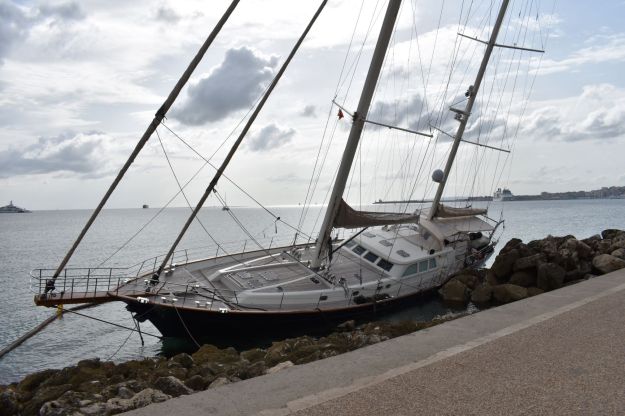
In mid-October we found ourselves on the south side of Mallorca, one of the Balearic Islands owned by Spain. There were strong winds expected overnight so we decided to take shelter in the harbor at Puerto El Arenal.  We hunkered down there for a few days then rented a car and drove to the nearby city of Palma.  On the way there we saw a sailboat sitting sideways on the rocks, blown there in the same winds we went in the harbor to avoid.  Good to have confirmation we made a good choice!

BoatOnRocks

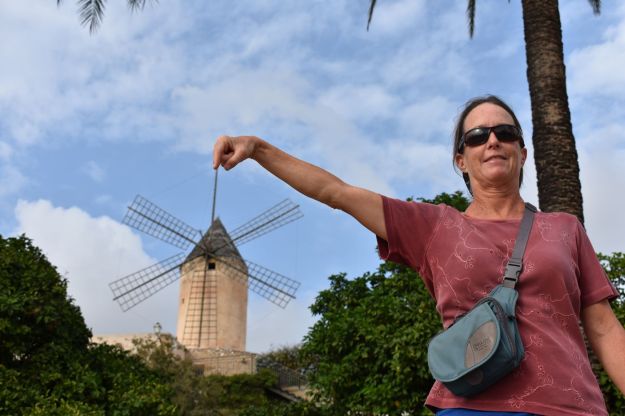
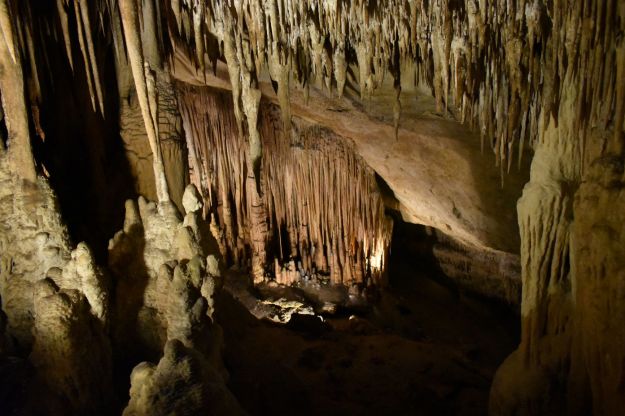
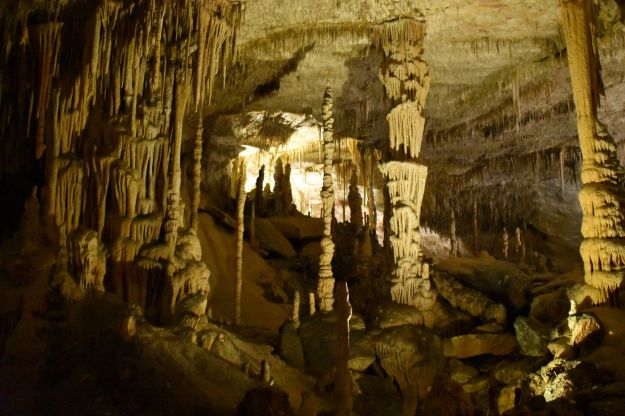
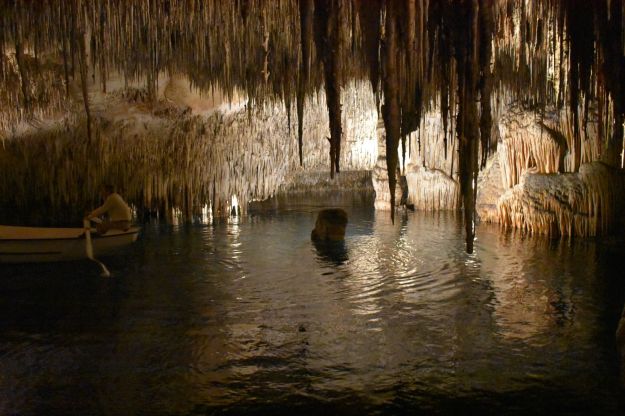
While we had the car we explored the interior of Mallorca.  The island is known for its historic windmills, different types for pumping water and for grinding grain.  We took a tour in the Caves of Dragons where we hiked a half hour down to a subterranean lake then watched a large rowboat come out on the lake with a live string quartet.  They rowed around and played classical music while we listened to the amazing acoustics inside the cave.  A unique experience!  While in the cave we met Bev, an Australian woman who was in Spain for the national and world blokart races. Dave and I had a chance to try these out when we were in New Zealand.  A blokart is a 3-wheeled cart with a sail and the “pilots” race them around dirt tracks.  We found out where the blokart races were being held and drove there to watch them.  Unfortunately the races had been canceled for the day due to recent heavy rains that made the track a muddy mess, but we chatted with the racers and met the Kiwi who invented the blokarts.  Fun!

Windmill

Stalactites_mites

CaveArt

Cave Lake

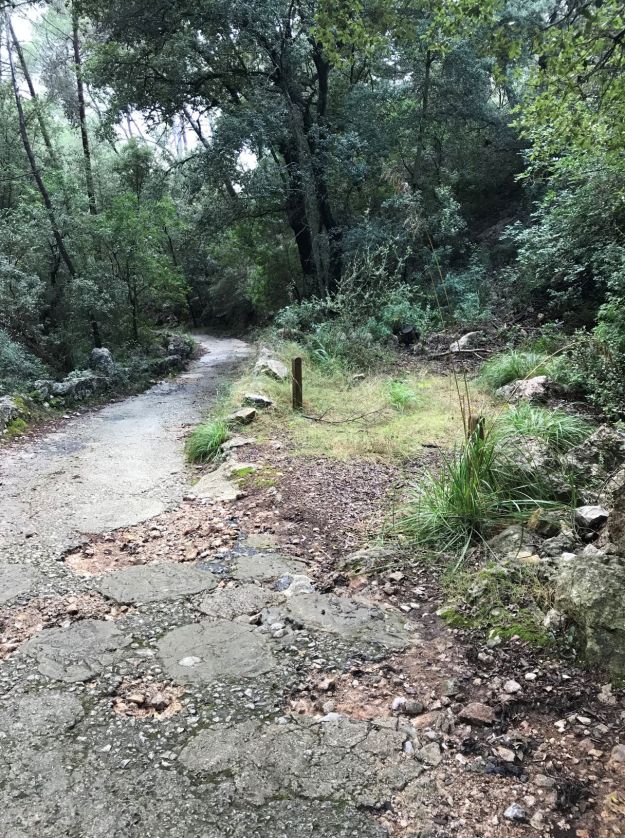
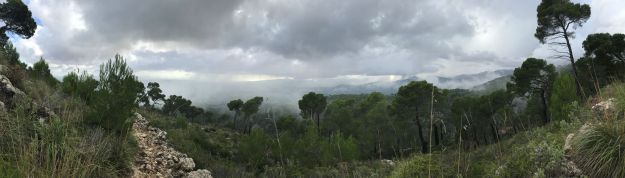
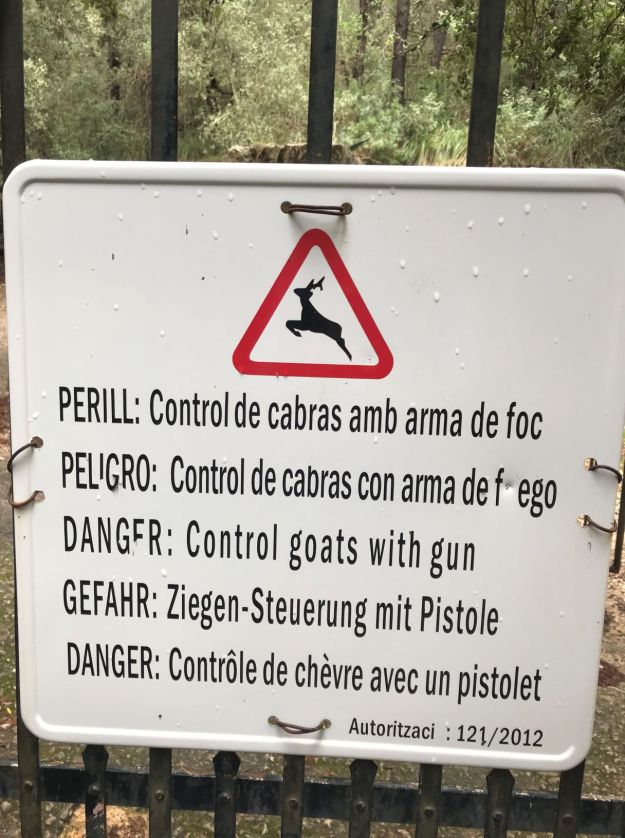
That afternoon we drove to the Panyal d’Honor trailhead for a hike.  As we got closer the road got narrower and narrower until it seemed skinnier than a single lane.  Eventually we chickened out for driving farther so we parked in a pullout and started walking.  It was a nice hike up a hill with views of the surrounding area.  On the way we saw several goats and a sign that said, “Control Goats With Gun”.  Luckily none of the goats we saw had guns!

NarrowRoad

Hike

GoatsGuns

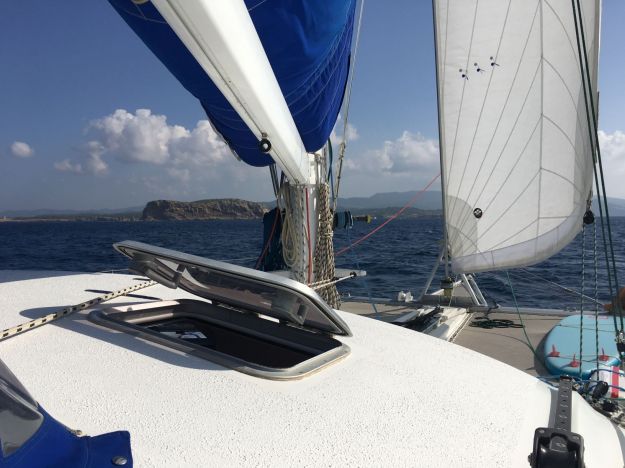
We had an uneventful 10-hour crossing to the island of Ibiza, sailed a fair amount of it. We anchored in Cala Charraca on the north coast then after sailing down the beautiful rocky west side of the island we anchored in Cala Tarida. There we explored the area on our SUPs.  We observed that the local method of docking consists of a unique system of tracks and blocks that pulls the skiffs up to small rickety boathouses.  The skiffs that aren’t in boathouses are tied to shore with gnarly looking sticks poking out of the ground.


SailingIbiza

IbizaSunset

SallyToIbiza

DaveSailingIbiza

BoathousesIbiza

In late October we left the Balearic Islands and did a 10-hour crossing to Ensenada de Altea, on the mainland of Spain.  On the way we decided to try fishing with a hand line for the first time; and we caught a fish!  A yummy small tuna that we ate for the next 2 days.  Working our way down the coast we stopped at Cabo de Palos and hiked to a lighthouse.

LighthouseHike

LighthouseArea

The next morning we waited for a thunderstorm to pass and, as the forecast called for only 10 knots of wind, we started around the corner toward Cartagena.  And then–bam! Winds in the upper 20s that rose to a high of 37 knots, and big 4+ meter waves.  It was a harrowing ride to Cartagena with big waves on our nose looking like walls.  One big wave went over our roof. None of the several forecasts we looked at predicted this. Time for new forecasting sources! It was a relief to finally get to the harbor, Yacht Port Cartagena. The marina in Cartagena has a reputation for friendly staff and an active group of sailors who spend the winter there.  Every Sunday they have a potluck dinner which we participated in, and we enjoyed meeting other English-speaking sailors.  We spent 5 days in Cartagena and explored the city.

CartagenaColloseum

CoolRoots

On November 1 we left Cartagena and worked our way SW along the Spanish coast.  Soon we came upon a sailboat that was drifting and waving us down.  They were out of fuel and asked if we could tow them to San Jose about 3 miles away.  So we did, and as we let go of the tow rope in front of their harbor they called on the radio “Wally Walou we love you!”  A little addition to our karma jar.  Unfortunately, it wasn’t free, because we were fishing with a hand line at the time and forgot about it as we were maneuvering for the tow.  The line ended up wrapping around one of our props and temporarily shut the engine down.  Luckily it started up again, but later we found there was water in the sail drive oil indicating the line had cut the oil seal.  Something to get fixed in the next harbor suited to hauling out a catamaran.

Towing

After three 10- or 11-hour days of motoring we anchored outside the harbor at Benalmadena.  We walked around the city and stumbled on a cable car up to a mountain overlooking the city.  We walked around at the top looking at beautiful views and as we were walking back toward the upper cable car station we came upon a falconry exhibition.  They had several species of falcons and eagles, and a huge eagle owl. They set the birds free to fly and soar above the crowd.  Some landed on peoples’ heads.  It was another unique experience.

On November 5 we picked up our friend Kevin from Alaska then moved down the coast to Marina Alcaidesa, a Spanish harbor just north of Gibraltar. This is the sending off-point for boats crossing the Atlantic.  We’ll spend the next week or so here getting ready to cross to the Canary Islands, the first stop on the crossing.

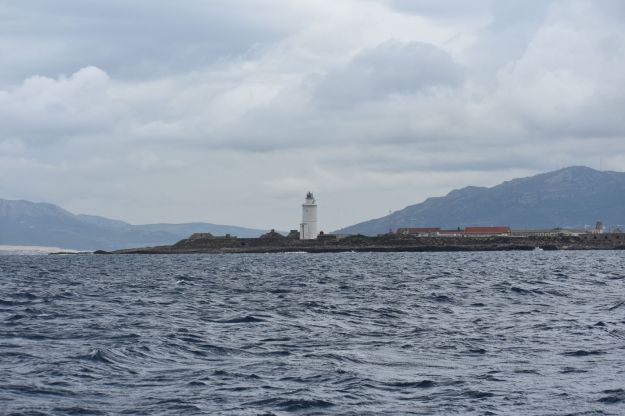
TheRock

Dave_KevinGibraltar

Bye Bye France

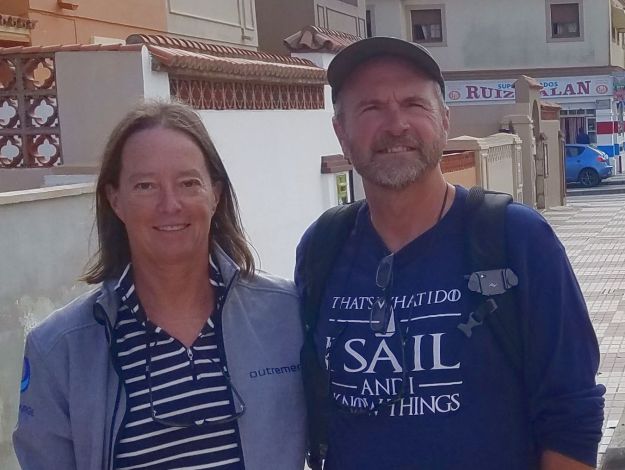
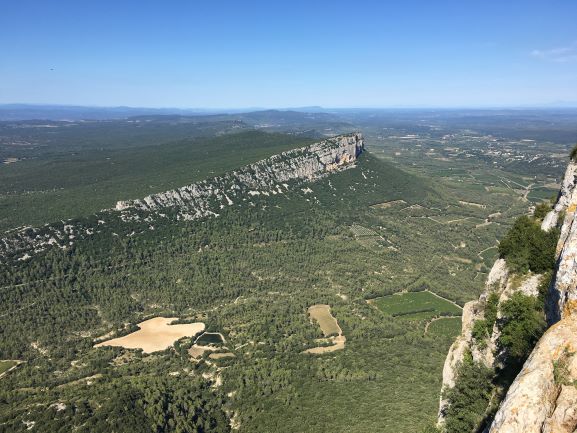
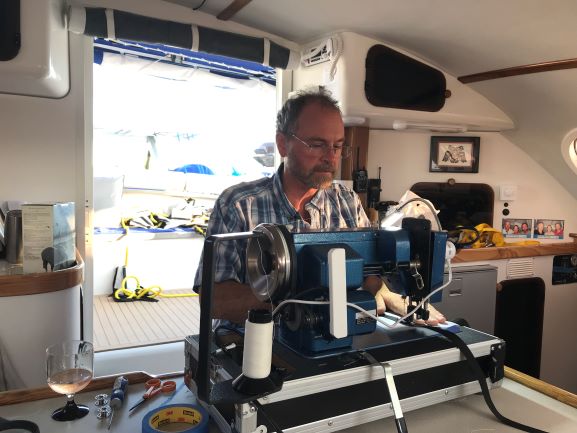
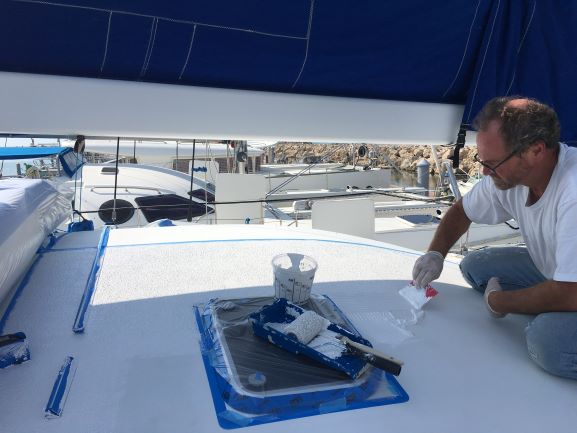
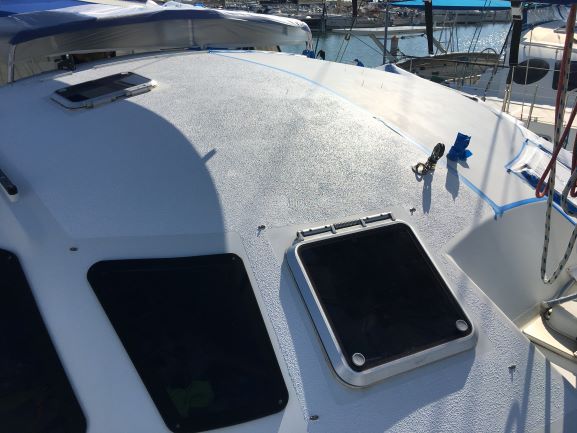
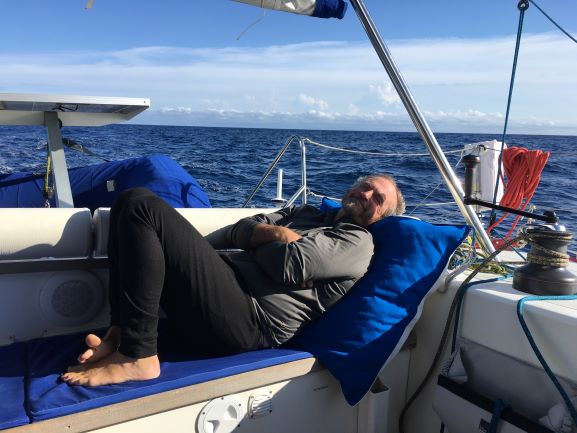
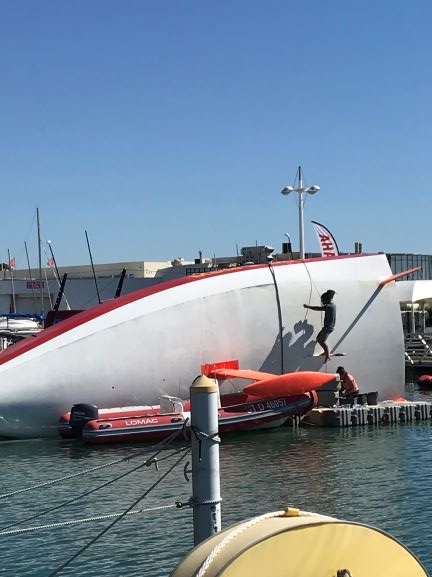
We have officially departed France! Sally and I spent the better part of the last 18 months in Port Camargue getting the boat and ourselves ready for crossing the Atlantic. In that time we made several friends and grew fond of the area. During the roughly 6 weeks we were there between late August and early October we were very busy.  We hiked a small mountain we had been gazing at from the harbor, Pic St Loup.  We sewed and assembled a 150-cone series drogue, a sea anchor designed to slow the boat down if necessary.  Dave applied a non-skid product called Kiwi Grip on our salon roof, drastically improving the nonskid on that curved surface.  We spent a few days chopping up the foam from inside the old ugly orange pfds that came with the boat and creating 2 new lounging pillows.  Near our slip we watched a French racing crew tip their boat over almost 90 degrees to clean the hull in preparation for the Route de Rhum sailing race, from France to the Caribbean Island of Guadelupe; crazy French sailors!  John-Marie and Sylvie on our neighboring boat Galopin gave us a going away party in combination with a birthday celebration for our other neighbor Guy in the boat on the opposite side of us.  A fun evening for all.  Both of us will miss the area and the people, but it was time to go!

Cactus.small

PicStLoup.small

Drogue.small

Sewing.small

KiwiGripApply.small

KiwiGripHalf.small

LoungePillow.small

HullCleaning.small

GoAwayParty.small

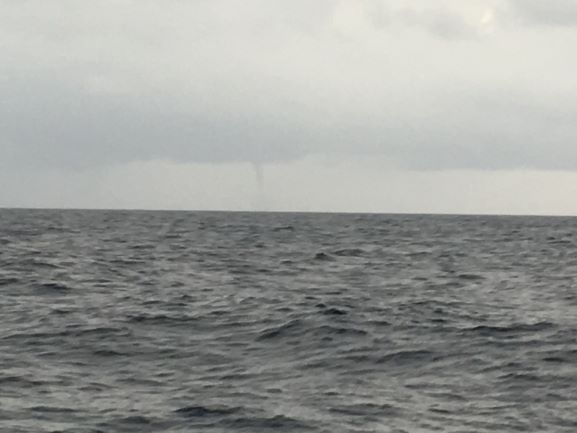
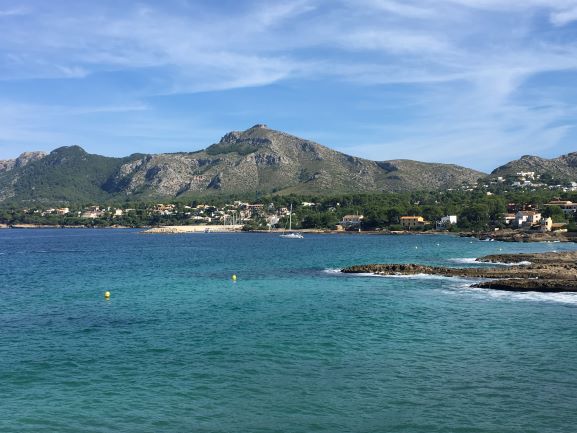
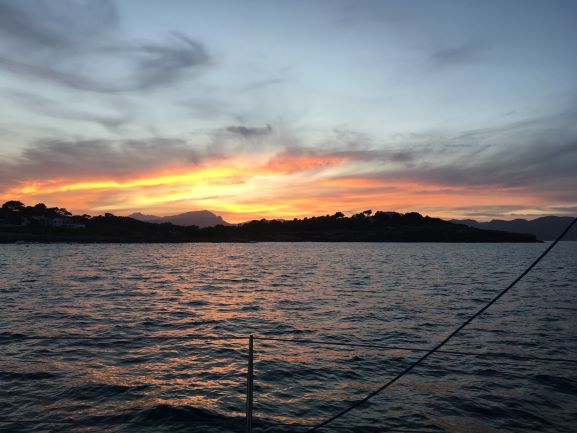
On October 8 we began our 36-hour crossing to Mallorca… it was “interesting”. The first 12 hours was an awesome easy downwind run with the code D. Then the angle got too deep for the code D so we put it away just before dark and continued with the (new) full Main. We had a light forecast so no big deal…. yea right. About 3am I’m taking a nap and the wind drops to nothing then goes to 20 kts from the other side of the boat! Backwinds the main and slams the preventer…bit of a fire drill, rain squalls etc. Dave wakes up, dives back into his gear and we go to reef 2 and then sail around in circles following the wind while the squall passes. Meanwhile it is raining harder than either of us can ever remember being outside in. We started out from France in shorts and arrived in Mallorca in full Musto Gear and tuffs… thunder, lightning, water spouts, dolphins, whales (the little Mediterranean kind). Then even though we know better and tried to avoid it, we arrived at a new place in the dark in really hard rain with next to no visibility, except for during lightning. With the help of electronic charts and a spotlight we successfully anchored in a sheltered spot out in front of Bonaire – Cocodrilo Marina, Pollenca Bay on the North end of Mallorca, and stayed there for a few days to dry out and recover.

FunnelCloud.small

Bonaire.small

BonaireSunset.small


I am not a fan of lighting. We had enough strikes in the area that we could smell the ozone in the air and at times the upper level lightning lit up the entire sky on all sides of us. We were close enough that the compass on the auto pilot was occasionally veering off course for a few minutes on several different occasions. We had purchased a “spare” mast top wind instrument and installed it the previous weekend. It died three days later about 15nm from the cove. Irritating, and while it died it messed up the comms on the NKE buss so the autopilot and lots of other stuff we like was unavailable for a bit.

After resting up we wanted to get our wind info back so I went up the mast to reinstall the original sensor. We were at anchor, light wind and only small waves. Well those small waves were directly on our side and translated into a lot more movement than I wanted for the trip up. When I was about 10 feet above the spreader I was getting tossed around so much that the wind instrument got shaken out of my tool bag. Miraculously it landed on the spreader. Sally shouted a warning since I was busy getting  tossed about in the rigging. The wind instrument actually stayed there long enough for me to drop back down and grab it, undamaged – amazing!  This was Thursday and we wanted to be able to mail out the failed instrument as soon as possible. Friday morning Google maps helped us make our way to the nearest “Oficina de Correos” (Spanish for Post office). The sign on the door said it should be “Open”; locked door and no lights said otherwise. We wandered around for a bit then found a Tabac shop that was a UPS package pick up. They told us that it was some kind of Spanish holiday and all the post offices were closed…but strangely they would be open on Saturday?.
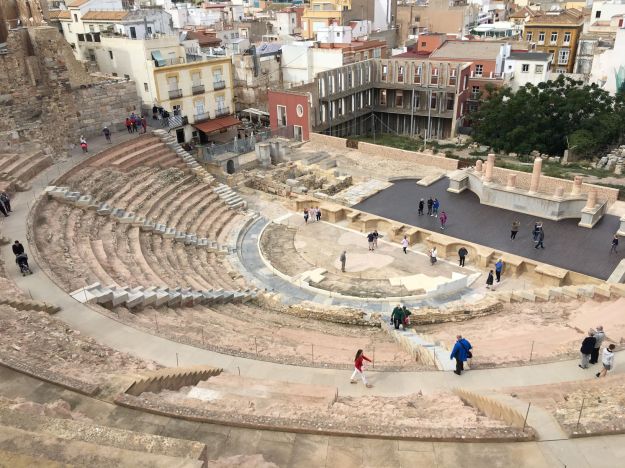
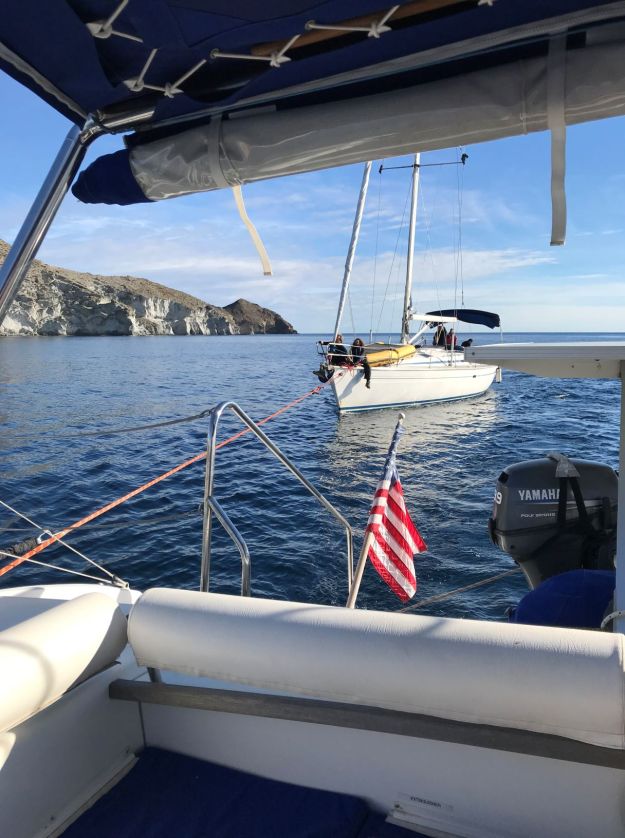
Alcudia.small

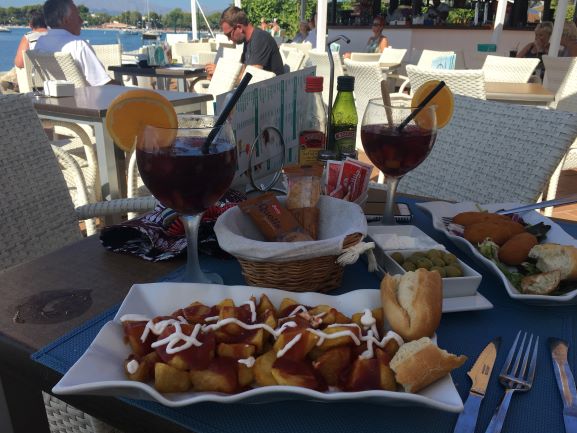
Over the next 2 days we moved to the south end of the island in preparation for some bad weather. Day 2 was a 64-mile day that ended with about 30 kts of breeze at our back surfing at as much as 13 kts, completely under control and comfortable.  Go Wally go! We are now tied up in Club Nautic Arenal at the southern end of Mallorca.The biggest negative to many harbors in the Med (other than cost) is surge. Wind and surge often combine to make the bad weather harbor stay a jerky bouncy experience. We are planning to rent a car and do some land exploring until the weather improves.

TapasSangria.small

FishBikeWine.small